
[00:00:03] [SPEAKER_02]: Soddy is writing time after time, elements chemically identical and non-separable by chemical methods.
[00:00:11] [SPEAKER_02]: And there's around about 44 of these they've discovered that they're working with.
[00:00:16] [SPEAKER_02]: Now this is one of the things that I love because history tells us that Soddy came up with the term isotopes.
[00:00:22] [SPEAKER_02]: But the story goes earlier that year he was actually at a dinner party
[00:00:25] [SPEAKER_02]: and people were talking about what was happening in radiochemistry.
[00:00:30] [SPEAKER_02]: Another guest at the party, a Dr. Margaret Georgina Todd, she was a specialist in Greek.
[00:00:37] [SPEAKER_02]: She suggested the term isotope and this is because in Greek, iso means same and topos means place.
[00:00:51] [SPEAKER_01]: Welcome to My Nuclear Life. I'm Shelly Lesher.
[00:00:55] [SPEAKER_01]: Today I sit down with Lucy Jane Santos who was one of my first guests on the podcast back in March of 2021.
[00:01:03] [SPEAKER_01]: At that time I spoke to her about her first book, Half-Lives, The Unlikely History of Radium.
[00:01:11] [SPEAKER_01]: Turns out she had enough research material for a whole other book.
[00:01:16] [SPEAKER_01]: This one, Chain Reactions, The Holtful History of Uranium is the topic of our conversation today.
[00:01:24] [SPEAKER_01]: If you enjoy what you hear head on over to our website,
[00:01:28] [SPEAKER_01]: MyNuclearLife.com for a link to pre-order her book, which will be released in the US on November 5th.
[00:01:40] [SPEAKER_01]: You've been on the show before speaking about radium but this is your new book called Chain Reactions
[00:01:46] [SPEAKER_01]: and that's about uranium.
[00:01:48] [SPEAKER_01]: So why did you pursue the story in the way you did?
[00:01:52] [SPEAKER_01]: And what I mean by that is there's a lot of humor to this book and there's a lot of humanity in this book,
[00:02:00] [SPEAKER_01]: the way that's usually lost in academic writing, especially talking about science.
[00:02:05] [SPEAKER_02]: I'm not sure why I wrote a second book on the topic in the sense that I felt halfway through that I was being a real glutton for punishment.
[00:02:14] [SPEAKER_02]: But it's kind of the fact that by the time I'd finished the first one,
[00:02:18] [SPEAKER_02]: so I finished writing the first one in March 2020 in lockdown and it came out in June 2020, I think, in the UK.
[00:02:29] [SPEAKER_02]: And I had all this research left over.
[00:02:31] [SPEAKER_02]: It was basically a thought process that I hadn't finished, a thought I hadn't finished and I cannot bear that.
[00:02:38] [SPEAKER_02]: So I thought, well there's more to this story and I can approach it from a different way.
[00:02:43] [SPEAKER_02]: And the different way was through the decay process.
[00:02:46] [SPEAKER_02]: So I'd been talking about radium, I'd been talking about radon,
[00:02:50] [SPEAKER_02]: but I thought, you know what, let's go back to the beginning of this story and let's go back to uranium
[00:02:55] [SPEAKER_02]: because again, there was so much material I had.
[00:02:58] [SPEAKER_02]: And one of the things that people said for my first book was that a lot of it was based in the UK
[00:03:02] [SPEAKER_02]: and what about the US story?
[00:03:05] [SPEAKER_02]: And a lot of my material, it couldn't fit in, was about the US.
[00:03:09] [SPEAKER_02]: So I came up with this idea, taking the story right back to the dawn of time
[00:03:15] [SPEAKER_02]: and looking at uranium and especially where the US story fitted in.
[00:03:20] [SPEAKER_02]: So it's sort of a prequel sequel, one of those TV shows where you have the different perspectives from the different characters.
[00:03:27] [SPEAKER_02]: And there's of course a fair bit of crossover on those stories, but they diverge into a mess of different ways.
[00:03:34] [SPEAKER_01]: Yeah and that's what I thought was really interesting is you do go back to the very beginning.
[00:03:39] [SPEAKER_01]: So that beginning is how does uranium get its name?
[00:03:44] [SPEAKER_02]: Well, I mean we're talking about, we're looking in the 18th century now.
[00:03:49] [SPEAKER_02]: So uranium is sort of semi-discovered.
[00:03:52] [SPEAKER_02]: Kluproff thinks that he's come up with a new element.
[00:03:55] [SPEAKER_02]: It turns out that it's not an element.
[00:03:57] [SPEAKER_02]: He really discovers uranium oxide, but it's good enough right now and we've got this element
[00:04:01] [SPEAKER_02]: and he names it a few years before he discovered uranium, his contemporary Herschel, I think it is now.
[00:04:10] [SPEAKER_02]: I can tell it's late afternoon where I am right now so my brain's not that working.
[00:04:14] [SPEAKER_02]: But I discovered the planet Uranus.
[00:04:17] [SPEAKER_02]: Normally in elements you sort of name it after yourself, don't you?
[00:04:21] [SPEAKER_02]: Or somebody names another after you.
[00:04:23] [SPEAKER_02]: He didn't want to do that so he came up with another name,
[00:04:26] [SPEAKER_02]: in tribute to his countryman who discovered Uranus.
[00:04:30] [SPEAKER_02]: Yeah and that's where uranium came from.
[00:04:33] [SPEAKER_02]: It's not quite as nice as Marie Curie naming radium after ray and polonium after Poland.
[00:04:40] [SPEAKER_02]: But still it's a nice story and it just shows that all of these elements have an interesting story to themselves.
[00:04:45] [SPEAKER_02]: They're their own origin story.
[00:04:47] [SPEAKER_01]: They do, yeah.
[00:04:49] [SPEAKER_01]: What I thought was interesting is they figured out how to use it in glassware.
[00:04:54] [SPEAKER_01]: And this is before like I know about uranium glass from the 60s when it becomes really popular
[00:04:59] [SPEAKER_01]: and those are the pieces that I have but they used it in glass long before the 60s
[00:05:05] [SPEAKER_01]: and in fact didn't you mention they had found it in Roman tile?
[00:05:10] [SPEAKER_02]: There is one piece of evidence that I'm aware of back in Roman times.
[00:05:14] [SPEAKER_02]: So second century AD there is a piece of Roman glass from a mosaic in a villa in Italy
[00:05:23] [SPEAKER_02]: and that was discovered in 1912 I think it was.
[00:05:26] [SPEAKER_02]: And it's a piece of uranium glass and nobody knows how it got there or what it was
[00:05:30] [SPEAKER_02]: because we don't find any other uranium glass around that time, earlier time
[00:05:35] [SPEAKER_02]: and then it doesn't really happen again until like into the 17th and 18th century, 18th century really.
[00:05:42] [SPEAKER_02]: And then it becomes incredibly popular but then we just got that little tease of somebody somewhere in Roman times
[00:05:50] [SPEAKER_02]: and we don't know exactly whether, we don't think it was necessarily made in Italy,
[00:05:53] [SPEAKER_02]: could have been imported, came up with this idea of using uranium deliberately or not, we just don't know
[00:06:00] [SPEAKER_02]: and created this beautiful mosaic.
[00:06:03] [SPEAKER_02]: Unfortunately the mosaic although it was photographed and catalogued
[00:06:06] [SPEAKER_02]: the uranium tiles are actually being disappeared through time.
[00:06:09] [SPEAKER_02]: Some of them got lost and some have got destroyed in a bomb in the Second World War as well
[00:06:15] [SPEAKER_02]: so we don't even really have it anymore but we have photographs of the actual mosaic and it's beautiful
[00:06:21] [SPEAKER_02]: but that's our evidence and like I said no one knows how that happened
[00:06:25] [SPEAKER_02]: but that's the thing with uranium, one of the really difficult things to trace back is our early use of it
[00:06:31] [SPEAKER_02]: and uranium you know it comes in the form of lots of different minerals
[00:06:35] [SPEAKER_02]: and lots of them are shiny and sparkly and beautiful colours as well
[00:06:40] [SPEAKER_02]: and quite a lot of it's on the surface of the earth as well
[00:06:42] [SPEAKER_02]: so you can imagine that people would stumble across it and find it
[00:06:46] [SPEAKER_02]: and probably come up with some use for it but we don't know what or how
[00:06:51] [SPEAKER_02]: so really although the uranium story starts with the formation of the earth
[00:06:56] [SPEAKER_02]: it's deeply embedded into the earth's crust.
[00:06:59] [SPEAKER_02]: We only have very tantalising glimpses of water actually meant to us
[00:07:03] [SPEAKER_02]: until at least the 18th century really and then it becomes incredibly popular
[00:07:08] [SPEAKER_02]: and as I tell in the book there are three, four, five different strands of real popularity
[00:07:16] [SPEAKER_02]: and real hope for it that it's going to cure something, change something
[00:07:21] [SPEAKER_02]: it gets used as diabetes treatment in women in the 1850s and onwards
[00:07:27] [SPEAKER_02]: it's hopefully that it's going to cure diabetes. Diabetes doesn't have a cure at this point
[00:07:31] [SPEAKER_02]: people are dying from it so it's really hoped that it will
[00:07:35] [SPEAKER_02]: and then to our story of what we still use uranium today in so many ways
[00:07:39] [SPEAKER_01]: I mean that's what never ceases to amaze me about humans
[00:07:43] [SPEAKER_01]: is that as soon as radioactivity is discovered
[00:07:46] [SPEAKER_01]: people automatically think it's a cure for something
[00:07:49] [SPEAKER_01]: it was the story with radium as well
[00:07:51] [SPEAKER_02]: Absolutely but we see it with a lot of technological advancements
[00:07:54] [SPEAKER_02]: I mean one of the things that I've become incredibly interested in
[00:07:58] [SPEAKER_02]: through writing these two books is the way that science and technology
[00:08:02] [SPEAKER_02]: gets integrated into our daily life
[00:08:04] [SPEAKER_02]: I mean electricity is discovered within 10 seconds practically
[00:08:09] [SPEAKER_02]: it's being co-opted as entertainment
[00:08:12] [SPEAKER_02]: it's been used in the theatre
[00:08:14] [SPEAKER_02]: this isn't just the story of artificial lights
[00:08:17] [SPEAKER_02]: it's about these things being co-opted as beauty treatments
[00:08:20] [SPEAKER_02]: electricity is beauty treatments, it's medical treatments the same with economics as well
[00:08:24] [SPEAKER_02]: and again through both books I talk about other technologies
[00:08:28] [SPEAKER_02]: and how we just go wild for them really
[00:08:31] [SPEAKER_01]: We do and that's one thing that surprised me is the X-ray slot machine
[00:08:36] [SPEAKER_01]: when did that become popular and why?
[00:08:40] [SPEAKER_01]: I mean you mentioned that that electricity is co-opted
[00:08:43] [SPEAKER_01]: but uranium is as well in this X-ray slot machine
[00:08:46] [SPEAKER_02]: Well everything is, I mean I've done a lot of research
[00:08:50] [SPEAKER_02]: since I finished writing a book into slot machines and vending machines
[00:08:53] [SPEAKER_02]: that's been a little obsession of mine fairly recently
[00:08:56] [SPEAKER_02]: and again there's always been vending machines and slot machine type things
[00:09:01] [SPEAKER_02]: you know when you put a penny in or put some sort of payment in and get something out
[00:09:05] [SPEAKER_02]: into the 19th century they start getting much more complex
[00:09:09] [SPEAKER_02]: the mechanisms become much better basically
[00:09:11] [SPEAKER_02]: and then that is exactly the same time as we get things like X-rays being discovered
[00:09:17] [SPEAKER_02]: X-rays are electrically generated or mechanically generated rays
[00:09:21] [SPEAKER_02]: and they start having slot machines
[00:09:24] [SPEAKER_02]: so you could go into a restaurant or a bar
[00:09:26] [SPEAKER_02]: particularly in the Chicago area
[00:09:28] [SPEAKER_02]: the main inventor of this was a Chicago based inventor
[00:09:31] [SPEAKER_02]: and yeah you go into a bar and put your hand in a slot
[00:09:35] [SPEAKER_02]: put your, I don't know how much it was, five cents or whatever it is
[00:09:38] [SPEAKER_02]: in and look down a little courthole thing
[00:09:40] [SPEAKER_02]: and you can see the inside of your hand
[00:09:43] [SPEAKER_02]: as many times as you like, as often as you're like
[00:09:45] [SPEAKER_02]: no one's stopping you just keep sticking your hand in
[00:09:48] [SPEAKER_02]: stick your friends' hands in all of those things
[00:09:50] [SPEAKER_02]: it's this sort of convergence of slot machine technology, X-ray technology
[00:09:55] [SPEAKER_02]: also restaurants and bars, more people have got a bit more money to spend time in these places
[00:10:01] [SPEAKER_02]: these restaurants and bars want to encourage people to stay
[00:10:04] [SPEAKER_02]: so they bring in these entertainments
[00:10:07] [SPEAKER_02]: and what's more entertaining than the latest in science
[00:10:11] [SPEAKER_01]: There were a couple stories that are in this book that I hadn't heard before
[00:10:16] [SPEAKER_01]: but you bring stories to the forefront about some women
[00:10:23] [SPEAKER_01]: one is about how isotope comes about
[00:10:27] [SPEAKER_01]: which I had never heard
[00:10:29] [SPEAKER_01]: could you tell us what an isotope is and how the name came about
[00:10:35] [SPEAKER_02]: You can do and I'm just going to go chat through my nights actually
[00:10:39] [SPEAKER_02]: because I want to get the ladies name right
[00:10:41] [SPEAKER_02]: because I'm very clear
[00:10:43] [SPEAKER_02]: one of the things I wanted to do with this is bring in the women
[00:10:47] [SPEAKER_02]: and bring in the women that don't necessarily form part of the story
[00:10:50] [SPEAKER_02]: so I'm going to actually quote from the book
[00:10:53] [SPEAKER_02]: quote from Frederick Soddy, the English chemist
[00:10:56] [SPEAKER_02]: so he grew tired of writing out the phrase
[00:11:00] [SPEAKER_02]: elements chemically identical and non-separable by chemical methods
[00:11:04] [SPEAKER_02]: so this is what an isotope was
[00:11:06] [SPEAKER_02]: and they were discovering lots of these isotopes at this time
[00:11:09] [SPEAKER_02]: so this is into the 19... 1900s early 1900s
[00:11:15] [SPEAKER_02]: and they were finding all these spontaneously formed elements
[00:11:18] [SPEAKER_02]: this is a really exciting time
[00:11:20] [SPEAKER_02]: where they're doing all sorts of things in science
[00:11:23] [SPEAKER_02]: so these elements that couldn't be separated through chemical means
[00:11:27] [SPEAKER_02]: because basically they had identical chemical properties
[00:11:31] [SPEAKER_02]: Soddy is writing time after time
[00:11:34] [SPEAKER_02]: elements chemically identical and non-separable by chemical methods
[00:11:38] [SPEAKER_02]: and there's around about 44 of these
[00:11:41] [SPEAKER_02]: that they've discovered that they're working with
[00:11:44] [SPEAKER_02]: now this is one of the things that I love
[00:11:46] [SPEAKER_02]: because history tells us that Soddy came up with the term isotopes
[00:11:50] [SPEAKER_02]: we know why, we know that a new term was needed
[00:11:53] [SPEAKER_02]: to actually describe what they were working with
[00:11:56] [SPEAKER_02]: and what they were coming up with
[00:11:57] [SPEAKER_02]: and one of the things that I found really interesting
[00:12:00] [SPEAKER_02]: was where people get these ideas from
[00:12:02] [SPEAKER_02]: and scientists don't work in a vacuum
[00:12:06] [SPEAKER_02]: I don't say they don't work in a lab but of course they do
[00:12:09] [SPEAKER_02]: but they work with people, they talk to people
[00:12:12] [SPEAKER_02]: they have friends, they have lives
[00:12:15] [SPEAKER_02]: full things like this
[00:12:16] [SPEAKER_02]: so the story goes is that Soddy got this term
[00:12:19] [SPEAKER_02]: because this is December 1913
[00:12:23] [SPEAKER_02]: it's first being used
[00:12:24] [SPEAKER_02]: but the story goes earlier that year he was actually at a party
[00:12:28] [SPEAKER_02]: with an industrial chemist and lots of other guests as well
[00:12:32] [SPEAKER_02]: and people were talking about what was happening
[00:12:35] [SPEAKER_02]: in radiochemistry, they were talking about all of these different elements
[00:12:38] [SPEAKER_02]: that people were dealing with
[00:12:40] [SPEAKER_02]: so the story goes that another guest at the party
[00:12:43] [SPEAKER_02]: a doctor Margaret Georgina Todd
[00:12:45] [SPEAKER_02]: she was a specialist in Greek
[00:12:49] [SPEAKER_02]: so it came up that she suggested the term isotope
[00:12:52] [SPEAKER_02]: and this is because in Greek iso means same
[00:12:56] [SPEAKER_02]: and topos means place
[00:12:59] [SPEAKER_02]: so she was using her knowledge of Greek
[00:13:02] [SPEAKER_02]: to come up with a scientific term
[00:13:04] [SPEAKER_02]: and I love that
[00:13:06] [SPEAKER_02]: I have all sorts of images of what this dinner party would look like
[00:13:11] [SPEAKER_02]: but history tells us that Soddy comes up with this
[00:13:14] [SPEAKER_02]: we know it was first published in Nature
[00:13:16] [SPEAKER_02]: in December 1913
[00:13:18] [SPEAKER_02]: but I love the story of where that came from
[00:13:21] [SPEAKER_02]: that somebody's knowledge of ancient Greek
[00:13:24] [SPEAKER_02]: just suggested this term
[00:13:27] [SPEAKER_02]: and it caught on
[00:13:28] [SPEAKER_02]: Soddy gets the credit of course
[00:13:30] [SPEAKER_02]: of course he does
[00:13:31] [SPEAKER_01]: first of all that is my kind of dinner party
[00:13:34] [SPEAKER_02]: I think it would be fun
[00:13:35] [SPEAKER_02]: I think they've been having some great chats
[00:13:38] [SPEAKER_02]: and I love the idea that you just sit there with some mates
[00:13:42] [SPEAKER_02]: and they solve a problem that you're having
[00:13:43] [SPEAKER_02]: it's great
[00:13:45] [SPEAKER_01]: and what a mixture of people if you have these radiochemists
[00:13:49] [SPEAKER_01]: and then you have someone with a PhD in ancient Greek
[00:13:52] [SPEAKER_01]: I mean what a great group of people
[00:13:54] [SPEAKER_02]: well a lot of these are
[00:13:56] [SPEAKER_02]: Soddy at this time is famous
[00:13:59] [SPEAKER_02]: he's discovered a lot
[00:14:00] [SPEAKER_02]: he's done a lot and that's the people he mixes with
[00:14:03] [SPEAKER_02]: Do you mix with those kind of people?
[00:14:05] [SPEAKER_02]: Oh gosh no I was just trying to think what terms my friends have come up with the dinner parties
[00:14:10] [SPEAKER_02]: and I don't think we can see them even
[00:14:13] [SPEAKER_02]: but no
[00:14:14] [SPEAKER_02]: I like to think that one day I'll be great enough
[00:14:17] [SPEAKER_02]: to go to a dinner party where someone says something awfully clever
[00:14:21] [SPEAKER_02]: and I'll laugh and pretend I know what it means and things
[00:14:24] [SPEAKER_01]: Yeah same
[00:14:25] [SPEAKER_01]: So there's another wonderful story about
[00:14:31] [SPEAKER_01]: a woman who is actually quite famous but not for this reason
[00:14:34] [SPEAKER_01]: Ida Nodak
[00:14:36] [SPEAKER_01]: but she kind of gets run through the coals
[00:14:39] [SPEAKER_01]: sort of speak about what she has to say about
[00:14:43] [SPEAKER_01]: Rithium is it?
[00:14:45] [SPEAKER_01]: Well this is
[00:14:46] [SPEAKER_02]: and again I'm going to head back to my book
[00:14:49] [SPEAKER_02]: because not
[00:14:50] [SPEAKER_02]: Yes of course
[00:14:51] [SPEAKER_02]: Not that I've got every single word I've written
[00:14:54] [SPEAKER_02]: but I have forgotten every single word I've written
[00:14:56] [SPEAKER_01]: Is it Rithium or Rithium how do you say it?
[00:14:59] [SPEAKER_02]: You know what I've never said it out loud
[00:15:00] [SPEAKER_02]: so your guess is as good as mine
[00:15:02] [SPEAKER_02]: She is one of a team of people who has discovered elements
[00:15:05] [SPEAKER_02]: she has worked as a chemist
[00:15:08] [SPEAKER_02]: industrial chemist she's done all sorts of things
[00:15:10] [SPEAKER_02]: and then she gets married
[00:15:13] [SPEAKER_02]: and at this point in time
[00:15:16] [SPEAKER_02]: in Germany where she's living
[00:15:17] [SPEAKER_02]: well you can't be married and be a scientist
[00:15:20] [SPEAKER_02]: you just can't
[00:15:22] [SPEAKER_02]: Not if you're a woman
[00:15:23] [SPEAKER_02]: Yeah if you're a woman
[00:15:24] [SPEAKER_02]: Yeah
[00:15:25] [SPEAKER_02]: So she has to basically leave her job
[00:15:28] [SPEAKER_02]: and then she becomes like
[00:15:30] [SPEAKER_02]: there's a term for it which I don't know is
[00:15:31] [SPEAKER_02]: it escapes my mind but it sort of means
[00:15:33] [SPEAKER_02]: wife partner
[00:15:35] [SPEAKER_02]: with her husband
[00:15:36] [SPEAKER_02]: and that means basically that she's allowed to work
[00:15:39] [SPEAKER_02]: she just doesn't get
[00:15:41] [SPEAKER_02]: she's not allowed to pay her
[00:15:43] [SPEAKER_02]: I find this very clever indeed
[00:15:44] [SPEAKER_02]: so she just sort of works with her husband
[00:15:48] [SPEAKER_02]: and doesn't get paid
[00:15:50] [SPEAKER_02]: but then does lots of really interesting science
[00:15:53] [SPEAKER_01]: But I'm sure her husband gets all the credit right?
[00:15:57] [SPEAKER_02]: There is a lot of credit that is given to husbands
[00:15:59] [SPEAKER_02]: in this situation
[00:16:00] [SPEAKER_02]: and there's also a lot of
[00:16:02] [SPEAKER_02]: well quite frankly there's a lot of disrespect
[00:16:04] [SPEAKER_02]: towards women scientists at this time
[00:16:08] [SPEAKER_02]: She is a really clever woman
[00:16:10] [SPEAKER_02]: and she has been working as a chemist
[00:16:12] [SPEAKER_02]: at this point
[00:16:13] [SPEAKER_02]: and so where she comes into history
[00:16:17] [SPEAKER_02]: in terms of uranium
[00:16:19] [SPEAKER_02]: is that this is where we could get booked
[00:16:23] [SPEAKER_02]: down in science
[00:16:23] [SPEAKER_02]: but there has been a discovery
[00:16:25] [SPEAKER_02]: there's lots of discoveries
[00:16:27] [SPEAKER_02]: especially in the first half of the book
[00:16:29] [SPEAKER_02]: It's very exciting
[00:16:31] [SPEAKER_02]: Discovery heavy
[00:16:32] [SPEAKER_02]: it gets less sciency as it gets on
[00:16:35] [SPEAKER_02]: She was an unpaid work unit
[00:16:37] [SPEAKER_02]: with her husband
[00:16:38] [SPEAKER_02]: So yes not very good though
[00:16:41] [SPEAKER_02]: Anyway there has been a discovery
[00:16:42] [SPEAKER_02]: and so into the 1930s
[00:16:45] [SPEAKER_02]: we're basically seeing
[00:16:46] [SPEAKER_02]: scientists bombarding elements with particles
[00:16:50] [SPEAKER_02]: They're just bombarding everything
[00:16:52] [SPEAKER_02]: to see what happens
[00:16:54] [SPEAKER_02]: to see what is going on
[00:16:56] [SPEAKER_02]: Gosh there's so much bombardment going on
[00:16:58] [SPEAKER_02]: And of course they're finding out new things
[00:17:00] [SPEAKER_02]: and discovering new things all the time
[00:17:02] [SPEAKER_02]: Now one of these bombardment experiments
[00:17:04] [SPEAKER_02]: creates new substances
[00:17:07] [SPEAKER_02]: creates new things
[00:17:09] [SPEAKER_02]: which the scientific community consensus is
[00:17:13] [SPEAKER_02]: are perhaps new elements
[00:17:15] [SPEAKER_02]: but heavier elements than
[00:17:17] [SPEAKER_02]: the heaviest that has been known before
[00:17:20] [SPEAKER_02]: So these are called transuranic elements
[00:17:23] [SPEAKER_02]: They are heavier than the heaviest element
[00:17:25] [SPEAKER_02]: And there's all sorts of explanations
[00:17:27] [SPEAKER_02]: about why this is happening
[00:17:28] [SPEAKER_02]: and what it means and things
[00:17:30] [SPEAKER_02]: and like I said the scientific consensus
[00:17:31] [SPEAKER_02]: is this is what's happening
[00:17:33] [SPEAKER_02]: Aida Noddick says
[00:17:35] [SPEAKER_02]: no I don't think this is what's happening
[00:17:37] [SPEAKER_02]: and I will tell you why
[00:17:38] [SPEAKER_02]: she tells them why
[00:17:39] [SPEAKER_02]: and gets firmly
[00:17:42] [SPEAKER_02]: firmly put down
[00:17:44] [SPEAKER_02]: by a lot of scientists
[00:17:47] [SPEAKER_01]: So wait first of all
[00:17:49] [SPEAKER_01]: it's Fermi's experiment right
[00:17:51] [SPEAKER_01]: so Fermi is the one
[00:17:52] [SPEAKER_01]: the big Nobel Prize winner guy
[00:17:55] [SPEAKER_01]: who's doing a lot of them bombarding
[00:17:57] [SPEAKER_01]: and Noddick comes along
[00:17:59] [SPEAKER_01]: and says what you're seeing
[00:18:01] [SPEAKER_01]: is what eventually becomes fission
[00:18:03] [SPEAKER_01]: Right so she actually does have
[00:18:06] [SPEAKER_01]: the correct interpretation
[00:18:08] [SPEAKER_02]: She does but like a lot of things
[00:18:11] [SPEAKER_02]: at this time people don't have
[00:18:12] [SPEAKER_02]: the language to really explain
[00:18:14] [SPEAKER_02]: I'm not defending her treatment actually
[00:18:17] [SPEAKER_02]: but no no I just think it's really
[00:18:21] [SPEAKER_01]: It's really exciting that she had
[00:18:24] [SPEAKER_01]: the correct interpretation
[00:18:25] [SPEAKER_01]: She's right
[00:18:26] [SPEAKER_02]: There's more stories I hadn't quite added in
[00:18:29] [SPEAKER_02]: but there's lots of really really
[00:18:30] [SPEAKER_02]: yeah lots of really rude stuff
[00:18:32] [SPEAKER_02]: being thrown at her
[00:18:33] [SPEAKER_02]: The worst thing is is that even when
[00:18:35] [SPEAKER_02]: she is proven right
[00:18:37] [SPEAKER_02]: when the idea of fission
[00:18:39] [SPEAKER_02]: is proven is shown
[00:18:41] [SPEAKER_02]: she's still roundly insulted
[00:18:44] [SPEAKER_02]: by the male scientists
[00:18:46] [SPEAKER_02]: on top of that so I just
[00:18:47] [SPEAKER_02]: yeah her story is not
[00:18:50] [SPEAKER_02]: she's not a hidden scientist
[00:18:52] [SPEAKER_02]: her story is known but
[00:18:53] [SPEAKER_02]: I don't think her place is fully
[00:18:55] [SPEAKER_02]: rightfully added to the
[00:18:57] [SPEAKER_02]: the story of uranium
[00:18:58] [SPEAKER_02]: I mean she got no credit at the time
[00:19:00] [SPEAKER_02]: she didn't really exactly
[00:19:02] [SPEAKER_02]: know what was going on but she
[00:19:04] [SPEAKER_02]: had a better idea than most
[00:19:06] [SPEAKER_02]: and I like to get
[00:19:08] [SPEAKER_02]: stories like that in
[00:19:09] [SPEAKER_02]: when C-Liard comes up with the idea
[00:19:12] [SPEAKER_02]: of a chain reaction
[00:19:13] [SPEAKER_02]: and starts patting things
[00:19:15] [SPEAKER_02]: the history books always said oh well he didn't really know
[00:19:18] [SPEAKER_02]: but you know he was on the right track
[00:19:20] [SPEAKER_02]: go boy blah blah blah
[00:19:21] [SPEAKER_01]: I was just about to mention
[00:19:25] [SPEAKER_01]: that that Szilard just says
[00:19:26] [SPEAKER_01]: like oh hey we can make a bomb
[00:19:28] [SPEAKER_01]: with no evidence whatsoever
[00:19:30] [SPEAKER_01]: and everybody credits him
[00:19:32] [SPEAKER_01]: with this but
[00:19:33] [SPEAKER_01]: yet Ida does the same thing
[00:19:36] [SPEAKER_01]: and I'd never heard this story
[00:19:38] [SPEAKER_02]: yeah there's some really interesting
[00:19:40] [SPEAKER_02]: books by
[00:19:42] [SPEAKER_02]: remember their names
[00:19:43] [SPEAKER_02]: who look at women scientists
[00:19:45] [SPEAKER_02]: and look at women scientists whose stories
[00:19:47] [SPEAKER_02]: haven't been told
[00:19:48] [SPEAKER_02]: but I hadn't seen it written into
[00:19:52] [SPEAKER_02]: a mainstream book one that
[00:19:54] [SPEAKER_02]: isn't specifically talking about
[00:19:56] [SPEAKER_02]: women scientists or
[00:19:57] [SPEAKER_02]: and that's what I wanted to try and do with this book
[00:20:00] [SPEAKER_02]: because a lot of these stories
[00:20:01] [SPEAKER_02]: are known you know that one
[00:20:03] [SPEAKER_02]: particularly didn't come out from me
[00:20:05] [SPEAKER_02]: reading original German scientific
[00:20:07] [SPEAKER_02]: papers from the 1920s
[00:20:09] [SPEAKER_02]: but they don't get told
[00:20:11] [SPEAKER_02]: in the overall story of uranium
[00:20:13] [SPEAKER_02]: I was trying to pull out lots of different stories
[00:20:15] [SPEAKER_02]: and putting female
[00:20:17] [SPEAKER_02]: scientists but also ordinary people
[00:20:19] [SPEAKER_02]: into this story as well
[00:20:21] [SPEAKER_02]: as much as possible so we didn't just get
[00:20:23] [SPEAKER_02]: the sort of roll call of
[00:20:25] [SPEAKER_02]: I don't know Becquerel
[00:20:26] [SPEAKER_02]: Marie Curie as our token woman
[00:20:28] [SPEAKER_02]: you know those types of things I wanted to get the other ones in
[00:20:31] [SPEAKER_01]: right I really enjoyed that part
[00:20:33] [SPEAKER_01]: I mean the whole creating
[00:20:35] [SPEAKER_01]: of the atomic bomb was just one chapter
[00:20:37] [SPEAKER_01]: I was impressed that you got it all
[00:20:39] [SPEAKER_01]: in one chapter that must have been very hard
[00:20:41] [SPEAKER_02]: yeah that was a lot of
[00:20:43] [SPEAKER_02]: blood sweaters because there are so many
[00:20:45] [SPEAKER_02]: interesting stories there
[00:20:47] [SPEAKER_02]: but I did feel that
[00:20:49] [SPEAKER_02]: some of them are well
[00:20:50] [SPEAKER_02]: trodden and I did
[00:20:52] [SPEAKER_02]: although I wanted to try and get as many of these stories in as possible
[00:20:55] [SPEAKER_02]: and make a well
[00:20:56] [SPEAKER_02]: rounded book I didn't
[00:20:58] [SPEAKER_02]: want it just to suddenly descend into
[00:21:00] [SPEAKER_02]: a here's the story of Oppenheimer
[00:21:03] [SPEAKER_02]: and what he did
[00:21:04] [SPEAKER_01]: another book about the atomic bomb
[00:21:06] [SPEAKER_02]: so I think I managed to mention
[00:21:08] [SPEAKER_02]: Oppenheimer three times
[00:21:10] [SPEAKER_02]: or four times not because it's not
[00:21:12] [SPEAKER_02]: an interesting story it's just
[00:21:14] [SPEAKER_02]: there are so many other stories
[00:21:16] [SPEAKER_02]: it's been told
[00:21:18] [SPEAKER_01]: it's been told however
[00:21:20] [SPEAKER_01]: there is one thing that I do
[00:21:22] [SPEAKER_01]: want to question you on
[00:21:25] [SPEAKER_01]: Scram is a myth
[00:21:28] [SPEAKER_01]: you are like
[00:21:30] [SPEAKER_01]: it is one of my favorite
[00:21:32] [SPEAKER_01]: there are two Fermi stories that I love
[00:21:34] [SPEAKER_01]: one is when he bombards
[00:21:36] [SPEAKER_01]: samples with neutrons
[00:21:38] [SPEAKER_01]: and then he runs down the
[00:21:40] [SPEAKER_01]: hall with his coat flapping
[00:21:42] [SPEAKER_01]: in the wind and you know
[00:21:44] [SPEAKER_01]: that one I love that image
[00:21:46] [SPEAKER_01]: of Fermi and the other one is Scram
[00:21:48] [SPEAKER_01]: and now you're telling me
[00:21:50] [SPEAKER_01]: one of my favorite
[00:21:52] [SPEAKER_01]: Fermi stories is wrong
[00:21:54] [SPEAKER_02]: I love a story
[00:21:56] [SPEAKER_02]: that's wrong as a historian
[00:21:58] [SPEAKER_02]: I'm not often allowed to put them into books
[00:22:01] [SPEAKER_02]: sometimes I say who cares
[00:22:02] [SPEAKER_02]: whether it's actually happened or not
[00:22:04] [SPEAKER_02]: but I'm a bad historian in that sense
[00:22:06] [SPEAKER_02]: sometimes the story around something
[00:22:08] [SPEAKER_02]: is more fun
[00:22:10] [SPEAKER_02]: and interesting than the actual reality
[00:22:12] [SPEAKER_02]: but yes that I have been reliably
[00:22:14] [SPEAKER_02]: informed is a myth which is
[00:22:16] [SPEAKER_02]: terrible but yeah people love it
[00:22:18] [SPEAKER_02]: people love it and
[00:22:20] [SPEAKER_02]: so many times I was putting in things and I was thinking
[00:22:22] [SPEAKER_02]: is this going to upset people if I
[00:22:24] [SPEAKER_02]: say this so the
[00:22:26] [SPEAKER_02]: Scram so the story is that
[00:22:28] [SPEAKER_02]: Fermi referred to Hilbury
[00:22:30] [SPEAKER_02]: Norman Hilbury who was one of the scientists
[00:22:32] [SPEAKER_02]: during the
[00:22:34] [SPEAKER_02]: Chicago Power One experiment
[00:22:36] [SPEAKER_02]: he was called the safety control
[00:22:38] [SPEAKER_02]: Rod Axman which then gets
[00:22:40] [SPEAKER_02]: shortened down to Scram
[00:22:42] [SPEAKER_02]: this is around the emergency shutdown
[00:22:44] [SPEAKER_02]: methods they had in place
[00:22:46] [SPEAKER_02]: when they were bringing up Cp1
[00:22:48] [SPEAKER_02]: to full power that first time
[00:22:50] [SPEAKER_02]: so that was quite a disappointing
[00:22:52] [SPEAKER_02]: thing that I'd seen that it wasn't
[00:22:54] [SPEAKER_02]: true like I said I'm not
[00:22:56] [SPEAKER_02]: sure it really matters if it's true
[00:22:58] [SPEAKER_02]: there's no real
[00:23:00] [SPEAKER_02]: evidence one way or another
[00:23:01] [SPEAKER_02]: but yeah there's lots of theories and all of them
[00:23:04] [SPEAKER_02]: are semi plausible and I say choose your favorite
[00:23:07] [SPEAKER_01]: well I'd like to even though
[00:23:08] [SPEAKER_01]: it's not true it is
[00:23:10] [SPEAKER_01]: a word that
[00:23:12] [SPEAKER_01]: pays homage to that first
[00:23:14] [SPEAKER_01]: reactor that is still
[00:23:16] [SPEAKER_02]: used today yeah in the later
[00:23:18] [SPEAKER_02]: half of the book I explore
[00:23:19] [SPEAKER_02]: lots of terms that we talk about now
[00:23:21] [SPEAKER_02]: that don't actually have any place
[00:23:23] [SPEAKER_02]: in reality one of the things
[00:23:25] [SPEAKER_02]: I talk about right towards the end
[00:23:27] [SPEAKER_02]: is myths around
[00:23:29] [SPEAKER_02]: spent nuclear fuel
[00:23:31] [SPEAKER_02]: for instance toxic waste
[00:23:33] [SPEAKER_02]: as we know it and if you're in your
[00:23:35] [SPEAKER_02]: forties as I'm I
[00:23:37] [SPEAKER_02]: we know it because it's always
[00:23:39] [SPEAKER_02]: in rusting barrels it's always
[00:23:41] [SPEAKER_02]: been dumped somewhere and it's always
[00:23:43] [SPEAKER_02]: leaking green goo we know
[00:23:45] [SPEAKER_02]: this we know this in our hearts that this is
[00:23:47] [SPEAKER_01]: what it is well the Simpsons
[00:23:49] [SPEAKER_01]: have told us that exactly
[00:23:51] [SPEAKER_02]: and so many other TV shows
[00:23:53] [SPEAKER_02]: and films I had a wonderful
[00:23:55] [SPEAKER_02]: couple of weeks of research
[00:23:57] [SPEAKER_02]: looking at all of the films
[00:23:59] [SPEAKER_02]: and it goes back to the 60s
[00:24:01] [SPEAKER_02]: those films of rusting barrels
[00:24:03] [SPEAKER_02]: being launched into the sea
[00:24:05] [SPEAKER_02]: and fish creatures being
[00:24:07] [SPEAKER_02]: eating the toxic waste and then coming
[00:24:09] [SPEAKER_02]: and killing there's one horror
[00:24:11] [SPEAKER_02]: movie where yeah they come onto the beach
[00:24:13] [SPEAKER_02]: and kill loads of people there's a Chevy
[00:24:15] [SPEAKER_02]: Chase one modern problems
[00:24:17] [SPEAKER_02]: where he gets a load of toxic nuclear
[00:24:19] [SPEAKER_02]: waste dumped on him and he gets
[00:24:21] [SPEAKER_02]: superpowers and
[00:24:23] [SPEAKER_02]: all sorts of things teenage mutant
[00:24:25] [SPEAKER_02]: ninja turtles for goodness sake
[00:24:27] [SPEAKER_02]: we know in our hearts that's what
[00:24:29] [SPEAKER_02]: spent nuclear waste is
[00:24:31] [SPEAKER_02]: it really isn't and
[00:24:33] [SPEAKER_02]: again I wanted to look at lots of
[00:24:35] [SPEAKER_02]: different terms and thoughts and stories
[00:24:37] [SPEAKER_02]: that we just
[00:24:39] [SPEAKER_02]: are so ingrained into us
[00:24:41] [SPEAKER_02]: we all know more about uranium
[00:24:42] [SPEAKER_02]: even non-scientists we know more about uranium
[00:24:45] [SPEAKER_02]: and I'll say no as in
[00:24:46] [SPEAKER_02]: with quote marks around we
[00:24:49] [SPEAKER_02]: have it ingrained into us we
[00:24:50] [SPEAKER_02]: were told a lot of stuff and it's usually
[00:24:53] [SPEAKER_02]: around how to fear nuclear
[00:24:55] [SPEAKER_02]: energy absolutely
[00:24:57] [SPEAKER_02]: so I wanted to also use this
[00:24:59] [SPEAKER_02]: book to try and
[00:25:01] [SPEAKER_02]: change some of those fears
[00:25:02] [SPEAKER_02]: and
[00:25:04] [SPEAKER_02]: pinpoint where they started
[00:25:06] [SPEAKER_02]: and why we believe that
[00:25:08] [SPEAKER_02]: so yeah I talk a lot about toxic waste
[00:25:10] [SPEAKER_02]: as well but don't let people
[00:25:12] [SPEAKER_02]: anyone be put off the book
[00:25:14] [SPEAKER_02]: just because I have like 20 pages
[00:25:16] [SPEAKER_02]: of toxic waste talk
[00:25:18] [SPEAKER_01]: oh that's not a lot it's like
[00:25:20] [SPEAKER_01]: a 10th of the 1% of the book
[00:25:22] [SPEAKER_02]: that's not a lot we have other
[00:25:24] [SPEAKER_02]: things as well I mean I get Elvis
[00:25:26] [SPEAKER_02]: Presley in there I have whole chapters on
[00:25:28] [SPEAKER_02]: Vegas
[00:25:29] [SPEAKER_02]: and atomic type testing
[00:25:31] [SPEAKER_02]: and how that affects Vegas
[00:25:33] [SPEAKER_02]: so there's more fun things
[00:25:35] [SPEAKER_02]: as well
[00:25:38] [SPEAKER_01]: why don't you tell our listeners about
[00:25:39] [SPEAKER_01]: Vegas and how
[00:25:41] [SPEAKER_01]: the testing
[00:25:43] [SPEAKER_01]: influenced it
[00:25:45] [SPEAKER_02]: so in 1951
[00:25:47] [SPEAKER_02]: the US government decides that they need
[00:25:49] [SPEAKER_02]: a continental US testing site
[00:25:52] [SPEAKER_02]: they've been blowing up the Pacific
[00:25:53] [SPEAKER_02]: for long enough they want to
[00:25:55] [SPEAKER_02]: test in the US there's all sorts of
[00:25:58] [SPEAKER_01]: I think what you mean is they destroyed
[00:25:59] [SPEAKER_01]: the Pacific so they needed a new testing ground
[00:26:02] [SPEAKER_02]: yeah they left very
[00:26:04] [SPEAKER_02]: very little
[00:26:06] [SPEAKER_02]: but they wanted somewhere
[00:26:08] [SPEAKER_02]: that was better security
[00:26:10] [SPEAKER_02]: in terms of they could control the area
[00:26:12] [SPEAKER_02]: it's obviously
[00:26:13] [SPEAKER_02]: much more difficult to ship people off
[00:26:16] [SPEAKER_02]: hundreds of miles rather than just
[00:26:18] [SPEAKER_02]: bring them into a town so
[00:26:20] [SPEAKER_02]: they found an
[00:26:22] [SPEAKER_02]: area in Nevada they found a desert
[00:26:24] [SPEAKER_02]: which they said was uninhabited
[00:26:25] [SPEAKER_02]: obviously it wasn't
[00:26:28] [SPEAKER_02]: are we doing quotes again
[00:26:30] [SPEAKER_02]: we are
[00:26:31] [SPEAKER_02]: as this isn't just for the
[00:26:33] [SPEAKER_02]: testing program the Manhattan project
[00:26:35] [SPEAKER_02]: they also took many uninhabited
[00:26:38] [SPEAKER_02]: quite much areas
[00:26:39] [SPEAKER_02]: and shipped the people off who were living there
[00:26:41] [SPEAKER_02]: whether that was
[00:26:42] [SPEAKER_02]: well they don't care who's on at the land
[00:26:45] [SPEAKER_02]: if they wanted it they shipped them off often
[00:26:47] [SPEAKER_02]: with no compensation at all
[00:26:49] [SPEAKER_02]: area of the Nevada desert that they
[00:26:51] [SPEAKER_02]: chose was Shoshone land
[00:26:53] [SPEAKER_02]: and they just
[00:26:54] [SPEAKER_02]: told people to leave
[00:26:55] [SPEAKER_02]: there were also about 100,000 people in general
[00:26:58] [SPEAKER_02]: living in that area as well
[00:27:00] [SPEAKER_02]: anyway wow that's a lot
[00:27:02] [SPEAKER_02]: of people it's a big area
[00:27:04] [SPEAKER_02]: but they came up with a testing site
[00:27:07] [SPEAKER_02]: set up big communities there
[00:27:08] [SPEAKER_02]: of you know you need a lot of people for
[00:27:10] [SPEAKER_02]: a testing project scientists
[00:27:12] [SPEAKER_02]: military they were doing tests on military
[00:27:14] [SPEAKER_02]: men as well so they're bringing
[00:27:16] [SPEAKER_02]: in soldiers they were known as the atomic soldiers
[00:27:19] [SPEAKER_02]: and they were bringing them in and putting
[00:27:20] [SPEAKER_02]: them very close to the atomic bomb
[00:27:22] [SPEAKER_02]: going off to see what that would
[00:27:24] [SPEAKER_02]: do so there's lots of things happening there
[00:27:27] [SPEAKER_02]: but the point is is that it
[00:27:29] [SPEAKER_02]: was you know 60 odd miles
[00:27:30] [SPEAKER_02]: away from Vegas you could see
[00:27:32] [SPEAKER_02]: the bombs going off from Vegas and
[00:27:35] [SPEAKER_02]: also the people who were working on these
[00:27:37] [SPEAKER_02]: sites and the soldiers
[00:27:38] [SPEAKER_02]: at the weekends and in the evenings
[00:27:40] [SPEAKER_02]: they would go to Vegas
[00:27:42] [SPEAKER_02]: for their downtime so we see
[00:27:44] [SPEAKER_02]: Vegas moving from quite a small
[00:27:46] [SPEAKER_02]: relatively small town
[00:27:49] [SPEAKER_02]: with a relatively small amount of tourism
[00:27:51] [SPEAKER_02]: to becoming this massive
[00:27:53] [SPEAKER_02]: hub of
[00:27:54] [SPEAKER_02]: gambling of you know everything we know about
[00:27:57] [SPEAKER_02]: Vegas today and that's largely because
[00:27:59] [SPEAKER_02]: as an area they
[00:28:01] [SPEAKER_02]: embraced the fact that they were so
[00:28:03] [SPEAKER_02]: close to the testing site so they
[00:28:05] [SPEAKER_02]: put on the hotels would
[00:28:07] [SPEAKER_02]: show you the best vantage spot
[00:28:09] [SPEAKER_02]: to watch the bomb go
[00:28:11] [SPEAKER_02]: off they put on parties
[00:28:12] [SPEAKER_02]: they did things like you could go and order
[00:28:14] [SPEAKER_02]: atomic cocktails at all of the hotels
[00:28:17] [SPEAKER_02]: actually they had atomic cocktails and if the hotel had
[00:28:19] [SPEAKER_02]: like a viewing area
[00:28:20] [SPEAKER_02]: they'd have a party and you drink your atomic
[00:28:23] [SPEAKER_02]: cocktail bomb would go off
[00:28:25] [SPEAKER_02]: often they're going off at 4 or 5 in the
[00:28:27] [SPEAKER_02]: morning so people are staying up
[00:28:29] [SPEAKER_02]: to watch them. That sounds
[00:28:31] [SPEAKER_01]: like another great party to attend
[00:28:33] [SPEAKER_02]: quite I actually really would love
[00:28:35] [SPEAKER_02]: this that's just
[00:28:37] [SPEAKER_02]: me but you know people in the town
[00:28:39] [SPEAKER_02]: would get their kids up in the mornings
[00:28:40] [SPEAKER_02]: and drive them into the desert to
[00:28:43] [SPEAKER_02]: get the best view this is
[00:28:45] [SPEAKER_02]: technology
[00:28:46] [SPEAKER_02]: this is technology history
[00:28:48] [SPEAKER_02]: being made in front of you and people
[00:28:51] [SPEAKER_02]: embraced it there's also the
[00:28:53] [SPEAKER_02]: atomic singer he was
[00:28:54] [SPEAKER_02]: Elvis Presley so
[00:28:56] [SPEAKER_02]: his first Vegas
[00:28:59] [SPEAKER_02]: residency he was known as the atomic
[00:29:01] [SPEAKER_02]: singer and all the posters
[00:29:03] [SPEAKER_02]: from that time I've seen a few of them
[00:29:04] [SPEAKER_02]: he's hotter than radioactive yams
[00:29:07] [SPEAKER_02]: he's the atomic singer he's all of these
[00:29:09] [SPEAKER_02]: things it's
[00:29:10] [SPEAKER_02]: fascinating. How do the
[00:29:13] [SPEAKER_01]: atomic yams
[00:29:15] [SPEAKER_01]: I'm not entirely sure. Is there a story
[00:29:17] [SPEAKER_01]: behind yams specifically
[00:29:19] [SPEAKER_01]: like why not atomic
[00:29:21] [SPEAKER_02]: potatoes? I wondered if that was
[00:29:23] [SPEAKER_02]: something that's kind of been lost to
[00:29:25] [SPEAKER_02]: history and something to do with
[00:29:26] [SPEAKER_02]: the Pacific I don't know
[00:29:29] [SPEAKER_02]: it's just felt like one of those things
[00:29:31] [SPEAKER_02]: that I couldn't as an English person
[00:29:32] [SPEAKER_02]: probably didn't understand and probably
[00:29:34] [SPEAKER_02]: just yeah I
[00:29:37] [SPEAKER_02]: didn't go into that but he was hotter than a radioactive
[00:29:39] [SPEAKER_02]: yam which I think we all know
[00:29:41] [SPEAKER_02]: that on a scale of one to ten as
[00:29:43] [SPEAKER_02]: as being hot. As a 12
[00:29:45] [SPEAKER_02]: as a 12 but he wasn't
[00:29:46] [SPEAKER_02]: apparently wasn't incredibly successful
[00:29:49] [SPEAKER_02]: for his first residency so
[00:29:51] [SPEAKER_02]: his atomic singing thing didn't work out
[00:29:53] [SPEAKER_01]: so he was more of a three
[00:29:54] [SPEAKER_02]: than a 10. Yeah but
[00:29:56] [SPEAKER_02]: he got notices in variety
[00:29:58] [SPEAKER_02]: and all of these things and obviously went on
[00:30:01] [SPEAKER_02]: to fame and fortune
[00:30:02] [SPEAKER_02]: but yeah so but his first Vegas residency
[00:30:05] [SPEAKER_02]: wasn't as successful as his last
[00:30:07] [SPEAKER_02]: and it was all around
[00:30:09] [SPEAKER_02]: being atomic which at that time
[00:30:11] [SPEAKER_02]: means good and sexy
[00:30:12] [SPEAKER_02]: and hot and radiating and all of those
[00:30:15] [SPEAKER_02]: things so yeah we get all of those things
[00:30:17] [SPEAKER_02]: so I managed to tell
[00:30:18] [SPEAKER_02]: stories about Elvis
[00:30:20] [SPEAKER_02]: I've got Frank Smart, try to mention Doris Day
[00:30:23] [SPEAKER_02]: you know you don't always
[00:30:25] [SPEAKER_02]: get those in books about uranium but I was
[00:30:27] [SPEAKER_02]: determined to and I did it.
[00:30:29] [SPEAKER_02]: Congratulations
[00:30:30] [SPEAKER_01]: I want to talk about the uranium craze
[00:30:32] [SPEAKER_01]: now that is a fun chapter
[00:30:35] [SPEAKER_01]: so what
[00:30:36] [SPEAKER_01]: brought on kind of uranium
[00:30:39] [SPEAKER_01]: prospecting and
[00:30:40] [SPEAKER_01]: why did the US government
[00:30:42] [SPEAKER_01]: encourage this like really weird
[00:30:45] [SPEAKER_01]: hobby of people
[00:30:46] [SPEAKER_01]: and why was it successful?
[00:30:49] [SPEAKER_02]: I said at the beginning
[00:30:50] [SPEAKER_02]: of this chat that
[00:30:52] [SPEAKER_02]: I had lots of material left over
[00:30:55] [SPEAKER_02]: from my first book and so much
[00:30:57] [SPEAKER_02]: of it was around the uranium craze
[00:30:59] [SPEAKER_02]: of the 1950s. Now this is
[00:31:01] [SPEAKER_02]: a legacy of the Manhattan
[00:31:03] [SPEAKER_02]: project this is a legacy
[00:31:04] [SPEAKER_02]: of atomic bomb testing
[00:31:06] [SPEAKER_02]: the US had created a bomb
[00:31:08] [SPEAKER_02]: they dropped three of them including
[00:31:10] [SPEAKER_02]: the Trinity test and then
[00:31:12] [SPEAKER_02]: they were masters of the atomic bomb
[00:31:14] [SPEAKER_02]: and everyone else was scrambling to catch up
[00:31:16] [SPEAKER_02]: but they didn't really know a huge
[00:31:17] [SPEAKER_02]: amount about what this was
[00:31:20] [SPEAKER_02]: they knew how to blow it up
[00:31:21] [SPEAKER_02]: but there was plenty of other tests
[00:31:23] [SPEAKER_02]: that if it hadn't been war time
[00:31:25] [SPEAKER_02]: they would have probably done a few more
[00:31:27] [SPEAKER_02]: of before what they did so
[00:31:29] [SPEAKER_02]: they start testing and
[00:31:31] [SPEAKER_02]: to have more bombs
[00:31:34] [SPEAKER_02]: they need more uranium to make
[00:31:36] [SPEAKER_02]: the bombs to make uranium bombs
[00:31:38] [SPEAKER_02]: or to breed plutonium to make
[00:31:39] [SPEAKER_02]: plutonium bombs and
[00:31:42] [SPEAKER_02]: there had been a small amount of
[00:31:43] [SPEAKER_02]: mining companies that had either
[00:31:45] [SPEAKER_02]: mined for uranium as part of a secret project
[00:31:47] [SPEAKER_02]: as part of the Manhattan project
[00:31:49] [SPEAKER_02]: and prior to that they had been mining uranium
[00:31:52] [SPEAKER_02]: in general, vanadium
[00:31:53] [SPEAKER_02]: as well which is another element
[00:31:55] [SPEAKER_02]: that was being mined it was being used to strengthen
[00:31:57] [SPEAKER_02]: steel they sort of found in the same
[00:32:00] [SPEAKER_02]: place but there wasn't enough companies
[00:32:02] [SPEAKER_02]: there wasn't enough time really
[00:32:04] [SPEAKER_02]: and also
[00:32:05] [SPEAKER_02]: the Atomic Energy Commission
[00:32:08] [SPEAKER_02]: the AEC were also trying
[00:32:10] [SPEAKER_02]: to bring the public into
[00:32:12] [SPEAKER_02]: the atomic dream
[00:32:14] [SPEAKER_02]: so they did that
[00:32:16] [SPEAKER_02]: through many ways they did lots of
[00:32:17] [SPEAKER_02]: atomic propaganda
[00:32:19] [SPEAKER_02]: but also the idea
[00:32:21] [SPEAKER_02]: was that they would encourage ordinary folks
[00:32:24] [SPEAKER_02]: to go out into the desert
[00:32:26] [SPEAKER_02]: the Colorado desert
[00:32:27] [SPEAKER_02]: during the weekends and during the evenings
[00:32:29] [SPEAKER_02]: and just pick up uranium
[00:32:31] [SPEAKER_02]: and if you
[00:32:33] [SPEAKER_02]: found a rich
[00:32:35] [SPEAKER_02]: seam of uranium, if you found
[00:32:37] [SPEAKER_02]: some really good strength uranium
[00:32:39] [SPEAKER_02]: they were going to reward you for it
[00:32:41] [SPEAKER_02]: so you were going to get money for it
[00:32:43] [SPEAKER_02]: I mean in practice
[00:32:46] [SPEAKER_02]: that's not really
[00:32:47] [SPEAKER_02]: an effective way to build up a mass
[00:32:49] [SPEAKER_02]: industry
[00:32:50] [SPEAKER_02]: no no no it's not
[00:32:52] [SPEAKER_02]: but it did excite people because there was an idea
[00:32:55] [SPEAKER_02]: that if you put on your right clothes
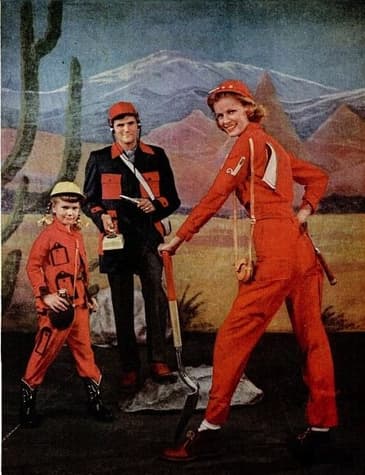
[00:32:58] [SPEAKER_02]: and there's a wonderful
[00:32:59] [SPEAKER_02]: article in Life magazine
[00:33:01] [SPEAKER_02]: 1951 I think it is
[00:33:03] [SPEAKER_02]: that shows the prospecting clothes
[00:33:06] [SPEAKER_02]: that the successful
[00:33:07] [SPEAKER_02]: family prospectors would wear
[00:33:09] [SPEAKER_02]: they are bright orange
[00:33:10] [SPEAKER_02]: they are just that 1950s fashion
[00:33:14] [SPEAKER_02]: that I adore
[00:33:15] [SPEAKER_02]: but it looks ridiculous
[00:33:16] [SPEAKER_02]: if you had the right clothes, the right Geiger counter
[00:33:19] [SPEAKER_02]: and the right
[00:33:21] [SPEAKER_02]: American attitude
[00:33:22] [SPEAKER_02]: you could go into the desert
[00:33:24] [SPEAKER_02]: and you could become a uranium air
[00:33:27] [SPEAKER_02]: and I love
[00:33:28] [SPEAKER_02]: that idea that you could just make your fortune
[00:33:31] [SPEAKER_02]: now there are plenty
[00:33:32] [SPEAKER_02]: of stories of people going out
[00:33:34] [SPEAKER_02]: you get the occasional story of people
[00:33:36] [SPEAKER_02]: finding a little bit of uranium
[00:33:38] [SPEAKER_02]: and making enough money
[00:33:40] [SPEAKER_02]: to go home and buy a new pair of shoes
[00:33:43] [SPEAKER_02]: or something I mean
[00:33:44] [SPEAKER_02]: but you also get plenty of people who
[00:33:46] [SPEAKER_02]: go out, who sell all of their
[00:33:49] [SPEAKER_02]: worldly goods, go out into the
[00:33:50] [SPEAKER_02]: middle of the desert in a tent
[00:33:52] [SPEAKER_02]: and almost die trying to
[00:33:54] [SPEAKER_02]: become a uranium air because it is
[00:33:57] [SPEAKER_02]: tough, you're not going to
[00:33:58] [SPEAKER_02]: find even in the 50s
[00:34:01] [SPEAKER_02]: where uranium mines haven't
[00:34:03] [SPEAKER_02]: been done to death as it were
[00:34:05] [SPEAKER_02]: you're not just going to really
[00:34:07] [SPEAKER_02]: stumble upon enough
[00:34:08] [SPEAKER_02]: uranium to make your fortune and those that
[00:34:11] [SPEAKER_02]: did there are a few people
[00:34:12] [SPEAKER_02]: like a man called Charlie Sheen or Charlie
[00:34:14] [SPEAKER_02]: an MJ Sheen
[00:34:16] [SPEAKER_02]: Stine even sorry Charlie Sheen
[00:34:18] [SPEAKER_02]: is an actor as far as I know
[00:34:20] [SPEAKER_02]: he's never, never
[00:34:22] [SPEAKER_02]: becoming a uranium millionaire
[00:34:24] [SPEAKER_02]: it's just because I was watching a TV show with
[00:34:26] [SPEAKER_02]: Martin Sheen and the other day Charlie
[00:34:28] [SPEAKER_02]: Stine. What are you going to say? That would have been impressive
[00:34:30] [SPEAKER_02]: Charlie Sheen. See I'm all about
[00:34:32] [SPEAKER_02]: the stories no one's ever heard of
[00:34:35] [SPEAKER_01]: we can start a rumor now
[00:34:38] [SPEAKER_02]: Stine
[00:34:40] [SPEAKER_02]: Charlie Stine
[00:34:41] [SPEAKER_02]: yeah so there's
[00:34:42] [SPEAKER_02]: stories of people who
[00:34:44] [SPEAKER_02]: basically in sell a lot
[00:34:46] [SPEAKER_02]: find a small amount of uranium
[00:34:48] [SPEAKER_02]: then find other people
[00:34:50] [SPEAKER_02]: who are going to invest in them
[00:34:51] [SPEAKER_02]: and then they start digging down and they need
[00:34:53] [SPEAKER_02]: huge amount of equipment this isn't
[00:34:55] [SPEAKER_02]: just picking up a few rocks
[00:34:57] [SPEAKER_02]: and putting it in their bag this then becomes a massive
[00:34:59] [SPEAKER_02]: industry so those weekend
[00:35:02] [SPEAKER_02]: prospectors a lot of them just
[00:35:03] [SPEAKER_02]: have a little bit of fun
[00:35:04] [SPEAKER_02]: those who do okay
[00:35:06] [SPEAKER_02]: just start throwing money at it and then it becomes
[00:35:09] [SPEAKER_02]: a massive industry and that's the sort
[00:35:11] [SPEAKER_02]: of legacy of the industry that we have
[00:35:13] [SPEAKER_02]: today by the late 50s
[00:35:16] [SPEAKER_02]: there's no more weekend
[00:35:17] [SPEAKER_02]: prospectors the government's not going to help
[00:35:20] [SPEAKER_02]: you anymore they're not going to
[00:35:21] [SPEAKER_02]: fund any money if you find any
[00:35:23] [SPEAKER_02]: uranium they're not going to produce booklets
[00:35:25] [SPEAKER_02]: they're not going to help in the way that they did
[00:35:27] [SPEAKER_02]: we just see those big mining companies
[00:35:30] [SPEAKER_02]: who've all shifted now
[00:35:32] [SPEAKER_02]: to mining uranium
[00:35:33] [SPEAKER_02]: on an industrial mass scale
[00:35:36] [SPEAKER_02]: and that's where the uranium comes
[00:35:38] [SPEAKER_02]: to do everything else
[00:35:39] [SPEAKER_02]: that uranium is needed for at this point
[00:35:42] [SPEAKER_01]: I'm a little confused by why
[00:35:44] [SPEAKER_01]: they would encourage people to do this
[00:35:46] [SPEAKER_01]: because whose land is this
[00:35:49] [SPEAKER_01]: I mean if you go off and you
[00:35:50] [SPEAKER_01]: find uranium doesn't somebody
[00:35:52] [SPEAKER_01]: own this land it's not like just
[00:35:54] [SPEAKER_02]: free land well they
[00:35:56] [SPEAKER_02]: I mean a lot of it is
[00:35:58] [SPEAKER_02]: indigenous land that has just been
[00:36:00] [SPEAKER_02]: seized and then
[00:36:01] [SPEAKER_02]: left to public land so you can
[00:36:03] [SPEAKER_02]: you can oh gotcha
[00:36:06] [SPEAKER_02]: so the places where quote nobody
[00:36:08] [SPEAKER_02]: lives nobody lives absolutely
[00:36:10] [SPEAKER_02]: not a not a soul
[00:36:12] [SPEAKER_02]: so yeah
[00:36:13] [SPEAKER_02]: this is new land
[00:36:16] [SPEAKER_02]: unlived on land
[00:36:17] [SPEAKER_02]: you can
[00:36:18] [SPEAKER_02]: under certain circumstances and in certain
[00:36:22] [SPEAKER_02]: land when it's not owned by
[00:36:24] [SPEAKER_02]: people who are recognized as people
[00:36:26] [SPEAKER_02]: you can stake a claim
[00:36:27] [SPEAKER_02]: and you can basically apply
[00:36:30] [SPEAKER_02]: for your permits and start
[00:36:32] [SPEAKER_02]: digging there's booklets lots
[00:36:34] [SPEAKER_02]: of booklets being published hundreds of
[00:36:36] [SPEAKER_02]: booklets that explain the difference between
[00:36:38] [SPEAKER_02]: land you can do that on
[00:36:40] [SPEAKER_02]: and land you can't do that on
[00:36:42] [SPEAKER_02]: so they're quite clear about
[00:36:44] [SPEAKER_02]: what land you can even
[00:36:46] [SPEAKER_02]: so you still get lots of examples
[00:36:48] [SPEAKER_02]: of people
[00:36:50] [SPEAKER_02]: staking a claim to particular land
[00:36:52] [SPEAKER_02]: and then someone else disagrees with them
[00:36:54] [SPEAKER_02]: and there's like uranium murders going on
[00:36:56] [SPEAKER_02]: and things like this is
[00:36:57] [SPEAKER_02]: if you find uranium
[00:37:00] [SPEAKER_02]: you're gonna get $50,000
[00:37:01] [SPEAKER_02]: you're gonna get a lot of money
[00:37:03] [SPEAKER_02]: so we start seeing like
[00:37:05] [SPEAKER_02]: turf wars going on and things like that
[00:37:08] [SPEAKER_02]: so it's high stakes
[00:37:10] [SPEAKER_02]: even if there's very few people
[00:37:11] [SPEAKER_02]: that actually succeed but for
[00:37:13] [SPEAKER_02]: a time for a few years
[00:37:15] [SPEAKER_02]: uranium is
[00:37:16] [SPEAKER_02]: a hugely desirable substance
[00:37:19] [SPEAKER_02]: and then that translates into songs
[00:37:21] [SPEAKER_02]: as well so we get lots of songs
[00:37:23] [SPEAKER_02]: around the uranium
[00:37:25] [SPEAKER_02]: fever there's hundreds of examples
[00:37:27] [SPEAKER_02]: from this period some of these songs
[00:37:29] [SPEAKER_02]: about the trials and tribulations
[00:37:31] [SPEAKER_02]: of uranium hunting in the desert
[00:37:33] [SPEAKER_02]: some of them are about
[00:37:35] [SPEAKER_02]: the hopes and dreams of striking rich
[00:37:37] [SPEAKER_02]: because you find uranium
[00:37:38] [SPEAKER_02]: a remarkable amount of songs at this period
[00:37:42] [SPEAKER_02]: just about uranium
[00:37:43] [SPEAKER_02]: so Frank Sinatra from High Society
[00:37:45] [SPEAKER_02]: who wants to be a millionaire
[00:37:46] [SPEAKER_02]: is that the song? It's a game show
[00:37:49] [SPEAKER_02]: it's a game show and that's why I'm doubting myself
[00:37:51] [SPEAKER_02]: but there is a song Frank Sinatra
[00:37:53] [SPEAKER_02]: and Celeste Home
[00:37:54] [SPEAKER_02]: and they have a line in it
[00:37:57] [SPEAKER_02]: with uranium to spare
[00:37:59] [SPEAKER_02]: uranium is associated with money
[00:38:01] [SPEAKER_02]: it's associated with being a millionaire
[00:38:02] [SPEAKER_02]: it's associated the same way as
[00:38:05] [SPEAKER_02]: gold watches and expensive jewels
[00:38:07] [SPEAKER_02]: are at the time
[00:38:08] [SPEAKER_01]: so what is your
[00:38:11] [SPEAKER_01]: favorite piece of
[00:38:13] [SPEAKER_01]: memorabilia from this time period?
[00:38:15] [SPEAKER_01]: I know you have something
[00:38:17] [SPEAKER_01]: I know you've gotten something off eBay somewhere
[00:38:19] [SPEAKER_02]: oh you know I have
[00:38:21] [SPEAKER_02]: yes oh gosh
[00:38:23] [SPEAKER_02]: there's so much
[00:38:24] [SPEAKER_02]: there's so much I wanted to buy
[00:38:27] [SPEAKER_02]: but luckily UK shipping
[00:38:29] [SPEAKER_02]: or US UK shipping laws means that a lot of the good stuff
[00:38:32] [SPEAKER_02]: I'm not legally allowed
[00:38:34] [SPEAKER_02]: to get shipped into this country
[00:38:35] [SPEAKER_02]: it's too bad you don't have a friend you could ship it to
[00:38:38] [SPEAKER_02]: and then visit and pick it all up
[00:38:40] [SPEAKER_02]: I know but then I saw
[00:38:42] [SPEAKER_02]: do you thought oh gosh if I ever did that
[00:38:44] [SPEAKER_02]: you know how much awful stuff would be
[00:38:46] [SPEAKER_02]: in my suitcase I'm so in trouble
[00:38:48] [SPEAKER_02]: those really good things
[00:38:50] [SPEAKER_02]: the thing that I actually got wildly obsessed with
[00:38:53] [SPEAKER_02]: and it's related to the uranium
[00:38:55] [SPEAKER_02]: hunting in the desert
[00:38:56] [SPEAKER_02]: was share certificates
[00:38:58] [SPEAKER_02]: stock certificates
[00:38:59] [SPEAKER_02]: and I put a few of them into the book
[00:39:03] [SPEAKER_02]: but they were encouraging weekend
[00:39:04] [SPEAKER_02]: prospectors but if you wanted to do business
[00:39:07] [SPEAKER_02]: you had to have stocks
[00:39:09] [SPEAKER_02]: and shares and uranium
[00:39:11] [SPEAKER_02]: was being traded in the same way as other
[00:39:14] [SPEAKER_02]: substances I love that idea
[00:39:16] [SPEAKER_02]: so I've got all these certificates of these
[00:39:17] [SPEAKER_02]: uranium companies of all these
[00:39:19] [SPEAKER_02]: people who were investing
[00:39:21] [SPEAKER_02]: in uranium trying to make their fortune
[00:39:24] [SPEAKER_02]: and I love them they are just
[00:39:26] [SPEAKER_02]: strange tangible bits of history
[00:39:28] [SPEAKER_02]: of a history that doesn't
[00:39:30] [SPEAKER_02]: exist anymore and it doesn't make sense
[00:39:32] [SPEAKER_02]: to us but yes uranium
[00:39:34] [SPEAKER_02]: stocks were incredibly
[00:39:36] [SPEAKER_02]: incredibly fashionable
[00:39:38] [SPEAKER_02]: desirable again people were
[00:39:40] [SPEAKER_02]: trading them like they were gold
[00:39:42] [SPEAKER_02]: like you know all of these things
[00:39:44] [SPEAKER_02]: and hundreds of companies mostly around Salt Lake City
[00:39:46] [SPEAKER_02]: so I love those
[00:39:48] [SPEAKER_02]: so they're my favorite things
[00:39:49] [SPEAKER_02]: just because I think mostly they're kind of unloved
[00:39:52] [SPEAKER_02]: and no one else but me wants them
[00:39:53] [SPEAKER_02]: but I love them. Oh I want them now
[00:39:56] [SPEAKER_01]: I'm gonna totally look for them
[00:39:57] [SPEAKER_02]: there is a remarkable amount of them
[00:40:00] [SPEAKER_02]: around because you know
[00:40:01] [SPEAKER_02]: they're pieces of paper that are often worth very much
[00:40:04] [SPEAKER_02]: and they were just being printed
[00:40:05] [SPEAKER_02]: and submitted in their
[00:40:07] [SPEAKER_02]: hundreds and thousands and again
[00:40:09] [SPEAKER_02]: they're easily found but the names
[00:40:12] [SPEAKER_02]: of the companies lightning uranium
[00:40:14] [SPEAKER_02]: and acne uranium
[00:40:16] [SPEAKER_02]: and things I just they all for me represent
[00:40:18] [SPEAKER_02]: somebody's dream
[00:40:19] [SPEAKER_02]: hmm yeah
[00:40:21] [SPEAKER_02]: usually a destroyed dream
[00:40:23] [SPEAKER_02]: because very few people made any money
[00:40:25] [SPEAKER_02]: out of uranium and if you were
[00:40:27] [SPEAKER_02]: buying stocks and shares it
[00:40:28] [SPEAKER_02]: it was a sort of a pyramid scheme in terms
[00:40:31] [SPEAKER_02]: of the first people did make a little bit
[00:40:33] [SPEAKER_02]: of money but if you were investing
[00:40:34] [SPEAKER_02]: after a couple of years yeah
[00:40:36] [SPEAKER_02]: you're not making a lot of money at all
[00:40:38] [SPEAKER_02]: just the people on the top
[00:40:40] [SPEAKER_02]: just the people on the top just the big companies
[00:40:43] [SPEAKER_02]: usually yes
[00:40:44] [SPEAKER_02]: never heard that before have we
[00:40:47] [SPEAKER_01]: no no no not at all
[00:40:48] [SPEAKER_01]: so I have a couple of
[00:40:50] [SPEAKER_01]: really really pretty pieces of uranium
[00:40:52] [SPEAKER_01]: glass but that's what I have
[00:40:54] [SPEAKER_01]: also when I would go to auctions and there was
[00:40:57] [SPEAKER_01]: uranium glass I tried to start
[00:40:58] [SPEAKER_01]: the rumor that it was radioactive
[00:41:00] [SPEAKER_01]: so that I would drive down the price
[00:41:02] [SPEAKER_02]: well I don't think it's really difficult
[00:41:04] [SPEAKER_02]: to start that room because people are
[00:41:07] [SPEAKER_02]: fundamentally scared
[00:41:08] [SPEAKER_02]: of even uranium glass
[00:41:10] [SPEAKER_02]: which is not very
[00:41:12] [SPEAKER_02]: substance I mean if you
[00:41:14] [SPEAKER_02]: if you eat off it
[00:41:15] [SPEAKER_02]: uranium glaze you know it's
[00:41:18] [SPEAKER_02]: the toxicity you don't want it's the radio
[00:41:20] [SPEAKER_02]: activity is largely
[00:41:21] [SPEAKER_02]: fine the toxicity of
[00:41:24] [SPEAKER_02]: the uranium is a heavy metal
[00:41:25] [SPEAKER_02]: but yeah people I have some uranium
[00:41:28] [SPEAKER_02]: glasses when I
[00:41:29] [SPEAKER_02]: get them out or if I drink from them
[00:41:31] [SPEAKER_02]: people are rather nervous
[00:41:34] [SPEAKER_02]: about it and I find that
[00:41:35] [SPEAKER_02]: fascinating I do too
[00:41:37] [SPEAKER_01]: I have a beautiful
[00:41:40] [SPEAKER_01]: uranium cake plate that's always my signature
[00:41:42] [SPEAKER_01]: cake plate for Christmas
[00:41:44] [SPEAKER_01]: and people are used to it now but
[00:41:45] [SPEAKER_01]: they get freaked out
[00:41:47] [SPEAKER_02]: we do see through history
[00:41:50] [SPEAKER_02]: there are a few periods
[00:41:51] [SPEAKER_02]: of terror around
[00:41:54] [SPEAKER_02]: uranium glass or uranium
[00:41:55] [SPEAKER_02]: glazed pots like fiesta
[00:41:58] [SPEAKER_02]: ware is the big one
[00:41:59] [SPEAKER_02]: very popular very desirable
[00:42:01] [SPEAKER_02]: very gorgeous we get
[00:42:04] [SPEAKER_02]: I have some of that too
[00:42:05] [SPEAKER_02]: oh it's just so you must as well
[00:42:08] [SPEAKER_02]: no I don't have a single piece actually
[00:42:09] [SPEAKER_02]: I don't know why I should
[00:42:11] [SPEAKER_02]: I think it's because I truly know that
[00:42:13] [SPEAKER_02]: if I did this would just be
[00:42:15] [SPEAKER_02]: a gateway and I would just
[00:42:17] [SPEAKER_02]: be buying all of it and I will not allow
[00:42:19] [SPEAKER_02]: myself got to be firm on these things
[00:42:21] [SPEAKER_02]: but it's gorgeous is that red beautiful
[00:42:23] [SPEAKER_02]: pottery is just beautiful
[00:42:25] [SPEAKER_02]: but we see into the
[00:42:27] [SPEAKER_02]: 60s and the 70s newspapers
[00:42:29] [SPEAKER_02]: dealing with all sorts of inquiries
[00:42:32] [SPEAKER_02]: from people should I throw this out
[00:42:33] [SPEAKER_02]: do I need to bury this is there a
[00:42:35] [SPEAKER_02]: way that I can dispose of it safely
[00:42:37] [SPEAKER_02]: so we get these little flurries
[00:42:39] [SPEAKER_02]: of panics around these products
[00:42:42] [SPEAKER_02]: which only a few years earlier had been
[00:42:44] [SPEAKER_02]: completely acceptable
[00:42:45] [SPEAKER_02]: but when we start seeing more
[00:42:47] [SPEAKER_02]: understanding of nuclear fallout
[00:42:49] [SPEAKER_02]: for instance when we start seeing
[00:42:51] [SPEAKER_02]: the occasional nuclear power plant
[00:42:54] [SPEAKER_02]: incident we start
[00:42:56] [SPEAKER_02]: seeing exactly at that time
[00:42:58] [SPEAKER_02]: three mile island 1979
[00:43:00] [SPEAKER_02]: suddenly people are worried
[00:43:02] [SPEAKER_02]: that their red ceramic plates
[00:43:04] [SPEAKER_02]: might poison them
[00:43:06] [SPEAKER_01]: you just gave me an image
[00:43:07] [SPEAKER_01]: I imagine
[00:43:08] [SPEAKER_01]: I would love for this to happen that I buy
[00:43:11] [SPEAKER_01]: this old house and I go to
[00:43:13] [SPEAKER_01]: dig a tree and I stumble across
[00:43:15] [SPEAKER_01]: this whole full
[00:43:17] [SPEAKER_01]: of old fiesta where
[00:43:20] [SPEAKER_01]: someone buried thinking that it was going
[00:43:22] [SPEAKER_01]: to kill them
[00:43:23] [SPEAKER_02]: I've not come across an incident of that
[00:43:25] [SPEAKER_02]: but I would be surprised if this never happened
[00:43:28] [SPEAKER_02]: because yeah people were
[00:43:30] [SPEAKER_02]: concerned they were burying them
[00:43:31] [SPEAKER_02]: they were asking newspaper
[00:43:33] [SPEAKER_02]: advice column this you know
[00:43:35] [SPEAKER_02]: is this safe have I
[00:43:37] [SPEAKER_02]: I mean it's funny in a way
[00:43:39] [SPEAKER_02]: but it's also tragic because
[00:43:41] [SPEAKER_02]: you see people saying you know have I poisoned my family
[00:43:44] [SPEAKER_02]: it's sad
[00:43:45] [SPEAKER_02]: and it's misplaced as well
[00:43:47] [SPEAKER_02]: you could one day find a whole
[00:43:49] [SPEAKER_02]: a whole little detrave of it
[00:43:52] [SPEAKER_01]: let's hope if any listeners
[00:43:53] [SPEAKER_01]: out there have stumbled across
[00:43:55] [SPEAKER_01]: it I want to know
[00:43:57] [SPEAKER_01]: well I guess if anyone has
[00:43:59] [SPEAKER_01]: stumbled across it I mean it's interesting
[00:44:01] [SPEAKER_01]: then that we go from this time when
[00:44:03] [SPEAKER_01]: and I guess this happens in a lot of
[00:44:05] [SPEAKER_01]: science that you know something
[00:44:07] [SPEAKER_01]: discovered in science becomes
[00:44:09] [SPEAKER_01]: entertainment and then
[00:44:11] [SPEAKER_01]: that opposite side of it is then it
[00:44:13] [SPEAKER_01]: becomes fear
[00:44:15] [SPEAKER_02]: yeah it's a cycle you know
[00:44:17] [SPEAKER_02]: wherever there's a great enthusiasm
[00:44:19] [SPEAKER_02]: about something whether it's science
[00:44:21] [SPEAKER_02]: or a pop star or a film
[00:44:23] [SPEAKER_02]: or anything like that you do
[00:44:25] [SPEAKER_02]: get that cycle people do like
[00:44:27] [SPEAKER_02]: to to bring things down to science
[00:44:30] [SPEAKER_02]: don't be
[00:44:30] [SPEAKER_02]: so you do get that yeah
[00:44:33] [SPEAKER_02]: and you definitely get it with the uranium
[00:44:35] [SPEAKER_02]: and you get it several times
[00:44:37] [SPEAKER_02]: and it's that it's a substance
[00:44:39] [SPEAKER_02]: that has great potential
[00:44:42] [SPEAKER_02]: for helping humanity in many
[00:44:44] [SPEAKER_02]: different ways
[00:44:44] [SPEAKER_02]: and unfortunately so much of
[00:44:47] [SPEAKER_02]: our attitudes towards this use
[00:44:50] [SPEAKER_02]: particularly in nuclear energy today
[00:44:52] [SPEAKER_02]: is that fear
[00:44:53] [SPEAKER_02]: around it and
[00:44:56] [SPEAKER_02]: we're not saying that fear isn't completely unwarranted
[00:44:58] [SPEAKER_02]: we need to be able to control things but we
[00:45:01] [SPEAKER_02]: we have it in a way
[00:45:02] [SPEAKER_02]: that we're not so scared of other forms
[00:45:05] [SPEAKER_02]: of energy I talk
[00:45:06] [SPEAKER_02]: about in the book I don't like to compare
[00:45:08] [SPEAKER_02]: energy I think any renewable
[00:45:10] [SPEAKER_02]: any low carbon energy is good
[00:45:12] [SPEAKER_02]: energy and should be encouraged
[00:45:14] [SPEAKER_02]: but I just find it interesting that
[00:45:16] [SPEAKER_02]: we don't have the same fear of hydropower
[00:45:18] [SPEAKER_02]: for instance when there has been many many
[00:45:20] [SPEAKER_02]: incidents of
[00:45:22] [SPEAKER_02]: hundreds of thousands of people's
[00:45:24] [SPEAKER_02]: either being killed or flooded
[00:45:26] [SPEAKER_02]: from their land when a dam goes wrong
[00:45:28] [SPEAKER_02]: as it were and we don't have that same
[00:45:30] [SPEAKER_02]: instinct of fear and
[00:45:31] [SPEAKER_02]: that fear is largely
[00:45:34] [SPEAKER_02]: because radioactivity is invisible
[00:45:36] [SPEAKER_02]: in a way that water isn't
[00:45:39] [SPEAKER_01]: I think that's absolutely true
[00:45:40] [SPEAKER_01]: I mean it's the same reason that people
[00:45:42] [SPEAKER_01]: aren't scared of driving but they're scared
[00:45:44] [SPEAKER_01]: of flying in a plane
[00:45:46] [SPEAKER_01]: I think it's that sense of control
[00:45:48] [SPEAKER_01]: like people for some reason
[00:45:50] [SPEAKER_01]: think they can outrun water
[00:45:52] [SPEAKER_02]: yeah one of the good
[00:45:54] [SPEAKER_02]: things about radioactivity is
[00:45:56] [SPEAKER_02]: it's so easily trackable
[00:45:58] [SPEAKER_02]: we can measure it we know when it's
[00:46:00] [SPEAKER_02]: there it may be invisible to the
[00:46:02] [SPEAKER_02]: eye but it's not invisible to scientific
[00:46:04] [SPEAKER_02]: equipment we know when it's there
[00:46:06] [SPEAKER_02]: we know when it's gone we know when it's safe
[00:46:08] [SPEAKER_02]: absolutely I'm not immune to it
[00:46:10] [SPEAKER_02]: myself I mean I came at this
[00:46:12] [SPEAKER_02]: project definitely not being
[00:46:14] [SPEAKER_02]: like a nuclear energy proponent
[00:46:16] [SPEAKER_02]: but I left this project thinking
[00:46:19] [SPEAKER_02]: oh everything
[00:46:20] [SPEAKER_02]: I know about this
[00:46:22] [SPEAKER_02]: has been
[00:46:24] [SPEAKER_02]: painted or clouded by
[00:46:25] [SPEAKER_02]: misinformation
[00:46:27] [SPEAKER_02]: and I want to come out of this
[00:46:29] [SPEAKER_02]: a different way and I want to understand it a bit more
[00:46:31] [SPEAKER_02]: and like I said that last
[00:46:33] [SPEAKER_02]: half not last half of the book last third
[00:46:35] [SPEAKER_02]: quarter of the book is really about
[00:46:37] [SPEAKER_02]: that misinformation and where
[00:46:39] [SPEAKER_02]: that comes from and trying to unpick
[00:46:41] [SPEAKER_02]: that a bit
[00:46:43] [SPEAKER_01]: so is that last bit
[00:46:45] [SPEAKER_01]: about talking about how we're
[00:46:47] [SPEAKER_01]: using uranium today and its benefits
[00:46:49] [SPEAKER_01]: to society it does
[00:46:51] [SPEAKER_02]: a little bit so the book itself finishes
[00:46:53] [SPEAKER_02]: with three mile island accident
[00:46:55] [SPEAKER_02]: in 1979
[00:46:57] [SPEAKER_02]: and then I moved that's a strong
[00:46:59] [SPEAKER_01]: close by the way
[00:47:01] [SPEAKER_02]: well I kind of felt that that's when
[00:47:03] [SPEAKER_02]: one of the hopeful histories
[00:47:05] [SPEAKER_02]: of uranium finished because up until
[00:47:07] [SPEAKER_02]: that point nuclear
[00:47:09] [SPEAKER_02]: energy had its people who didn't like
[00:47:11] [SPEAKER_02]: it you know but there was still
[00:47:14] [SPEAKER_02]: enough hope around
[00:47:15] [SPEAKER_02]: it there were still a massive industry
[00:47:17] [SPEAKER_02]: people were still investing
[00:47:19] [SPEAKER_02]: governments were still investing a lot of money
[00:47:22] [SPEAKER_02]: so I finished there
[00:47:23] [SPEAKER_02]: and then I started talking about
[00:47:25] [SPEAKER_02]: what happened since now we can't get away
[00:47:27] [SPEAKER_02]: from the fact that there's also Chernobyl
[00:47:29] [SPEAKER_02]: we can't get away from the fact that's
[00:47:31] [SPEAKER_02]: Fukushima and they are
[00:47:32] [SPEAKER_02]: incidents they are accidents in the case
[00:47:35] [SPEAKER_02]: Chernobyl that have
[00:47:37] [SPEAKER_02]: impacted us greatly in terms
[00:47:39] [SPEAKER_02]: of what we think about nuclear energy
[00:47:40] [SPEAKER_02]: but I didn't want to just tell the story
[00:47:43] [SPEAKER_02]: of three mile island and tell the story of
[00:47:45] [SPEAKER_02]: Chernobyl than tell the story of Fukushima
[00:47:46] [SPEAKER_02]: so I did those anything after
[00:47:49] [SPEAKER_02]: 1980 I sort of
[00:47:51] [SPEAKER_02]: weaved around ideas
[00:47:53] [SPEAKER_02]: of television shows
[00:47:55] [SPEAKER_02]: films and
[00:47:57] [SPEAKER_02]: our understanding of radioactivity
[00:47:59] [SPEAKER_02]: through cultural aspects
[00:48:01] [SPEAKER_02]: so that's sort of the history finishes
[00:48:03] [SPEAKER_02]: in 1979 everything else I'm thinking
[00:48:05] [SPEAKER_02]: is more current
[00:48:06] [SPEAKER_02]: because it's part of that current story
[00:48:09] [SPEAKER_02]: it's really difficult to write about
[00:48:11] [SPEAKER_02]: a technology that is advancing
[00:48:12] [SPEAKER_02]: as quickly as nuclear
[00:48:14] [SPEAKER_02]: fission and fusion right now
[00:48:17] [SPEAKER_02]: and an industry
[00:48:19] [SPEAKER_02]: like the nuclear power industry
[00:48:21] [SPEAKER_02]: which every week
[00:48:23] [SPEAKER_02]: now there's a new advancement
[00:48:24] [SPEAKER_02]: there's a new investment so many
[00:48:27] [SPEAKER_02]: countries are investing heavily
[00:48:28] [SPEAKER_02]: in nuclear now to get to the
[00:48:31] [SPEAKER_02]: in the UK we've got 2050
[00:48:32] [SPEAKER_02]: is the target to get as low
[00:48:34] [SPEAKER_02]: as we can go in terms of carbon
[00:48:37] [SPEAKER_02]: and it's really
[00:48:38] [SPEAKER_02]: difficult to write about that because
[00:48:40] [SPEAKER_02]: as soon as the book was handed over it's out of date
[00:48:43] [SPEAKER_02]: so I've kind of
[00:48:45] [SPEAKER_02]: been a little vague
[00:48:46] [SPEAKER_02]: about where we are right now
[00:48:48] [SPEAKER_02]: because I'm a historian
[00:48:50] [SPEAKER_02]: this is moving rapidly
[00:48:52] [SPEAKER_02]: I mean we've seen recently
[00:48:54] [SPEAKER_02]: about the rise of AI and how those
[00:48:57] [SPEAKER_02]: AI companies are turning to nuclear
[00:48:59] [SPEAKER_02]: to power because nuclear
[00:49:00] [SPEAKER_02]: is the only thing that is
[00:49:02] [SPEAKER_02]: going to allow them to grow to the levels
[00:49:04] [SPEAKER_02]: that they want to take
[00:49:06] [SPEAKER_02]: this technology to
[00:49:08] [SPEAKER_02]: now I've finished writing the book
[00:49:10] [SPEAKER_02]: like December
[00:49:12] [SPEAKER_02]: that's moved on completely now
[00:49:14] [SPEAKER_02]: I think AI and nuclear
[00:49:16] [SPEAKER_02]: is going to change how our perceptions are
[00:49:18] [SPEAKER_02]: of nuclear I think these companies are going to
[00:49:19] [SPEAKER_02]: embrace it in a way that we have not
[00:49:22] [SPEAKER_02]: seen for a long time
[00:49:23] [SPEAKER_02]: and I don't know how I feel
[00:49:26] [SPEAKER_02]: about that but that's changing
[00:49:28] [SPEAKER_02]: very very rapidly
[00:49:40] [SPEAKER_01]: between the US and London
[00:49:42] [SPEAKER_01]: in case you're wondering
[00:49:44] [SPEAKER_01]: there is still time to enter
[00:49:46] [SPEAKER_01]: your idea on
[00:49:48] [SPEAKER_01]: how to store nuclear waste
[00:49:50] [SPEAKER_01]: long into the future
[00:49:52] [SPEAKER_01]: as discussed in the last
[00:49:54] [SPEAKER_01]: episode about ray cats
[00:49:56] [SPEAKER_01]: if you are enjoying our podcast
[00:49:58] [SPEAKER_01]: please tell a friend
[00:50:00] [SPEAKER_01]: or rate and review on
[00:50:02] [SPEAKER_01]: apple podcast or wherever
[00:50:04] [SPEAKER_01]: you're listening until
[00:50:06] [SPEAKER_01]: next time I'm Shelly Lecher
[00:50:08] [SPEAKER_01]: and this has been my nuclear life