Adventures in Nuclear Risk Reduction - Georgia Pt 2
My Nuclear LifeMarch 27, 2024
55
00:52:44120.71 MB

Adventures in Nuclear Risk Reduction - Georgia Pt 2

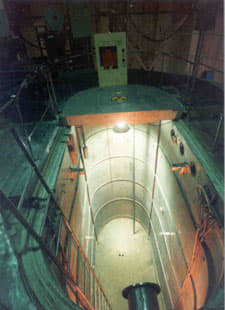
Shelly continues her stay in Tbilisi, Georgia and speaks to two Physicists, Giorgia Japaridz (Illia State Univ.) and Revaz Shanidze (Tbilisi State Univ). They discuss what life as a physicist was like under Soviet rule and after Georgian independence. Along the way we learn about scientists who protected nuclear material when security fled, why the Institute’s reactor was unique, and find out how to survive in post-Soviet times.

This podcast is in collaboration with The Stanley Center for Peace and Security.

[00:00:00] First of all what disappeared was the security of the institute, the reactor. So there was

[00:00:10] a police and police was absent, there was nobody who looked into the entrance to the

[00:00:16] reactor. So how it was solved, the colleagues working on the institute became bodyguards

[00:00:23] of the institute and the reactor also. To save it took a lot of time to convince government

[00:00:29] to then recreate this point is to send somebody to take responsibility because there was

[00:00:35] nobody thinking about.

[00:00:43] Welcome to my nuclear life, I'm Shelly Lesher. Today we have a second episode on Georgian

[00:00:48] scientists in collaboration with the Stanley Center for Peace and Security. In the last episode

[00:00:54] we heard from Sherona and Mariam, this episode we hear from two Georgian physicists. Georgie

[00:01:01] Jeperese is a professor of physics at Ilya University in Tbilisi and was elected a member

[00:01:08] of the Georgian Academy of Sciences in 2013. He is a theorist in condensed matter and worked

[00:01:14] at the Institute of Physics which is where many of his stories take place. Rava Shanica is a professor

[00:01:20] of physics at Tbilisi State University. He is a high energy physicist who worked in Dubna during

[00:01:26] the Soviet times and it surned after Georgia independence since then he has been collaborating

[00:01:32] in many high energy projects which span the globe. We're going to start with why Georgie

[00:01:38] doesn't like administrative roles and then Ravi picks up on the Soviet scientific roles.

[00:01:49] Did you purposely avoid it? No I don't like I'm a student. I'm a better administrator

[00:01:53] and I do not like to be when administration is connected with science too, still it's possible.

[00:02:00] But when there are more obligations and you have to deal with a big number of people,

[00:02:06] it's not my line. For me it's very important to have a freedom not to communicate with

[00:02:14] a big number of people. So when you have a freedom to communicate with subgroup of people

[00:02:21] you like to communicate, you maybe have to do obligations, but you choose with whom you

[00:02:29] are in contact. But when your position ablides you to communicate with everybody who knocks on

[00:02:36] your door, for me it's impossible so my system is not ready for this. I'm trying to avoid this

[00:02:43] so that is a way of my attitude towards it. You mentioned freedom and that's interesting

[00:02:49] going to pick up on that. What was the academic freedom like during the Soviet period when it comes

[00:02:55] to the science? Were you able to do any sort of science you wanted or was it a little bit more

[00:03:02] restrictive? Yeah it's a good question. It's a very good question because now it's quite common

[00:03:07] to say that Soviet Union was very, very bad. Of course it was bad from the political sense of

[00:03:12] view but from the point of view of science and science it was not that bad because when I was very

[00:03:18] young of course we know that there is concern, there is experiments, fundamental research there

[00:03:25] and it was kind of unacceptable for us, inaccessible because it was very difficult to imagine

[00:03:32] that you are in a certain experiment. But the experimented Soviet Union, you were doing experiments

[00:03:37] and nobody was telling you what to do there because I think they didn't know what we are doing

[00:03:42] and they cannot advise us so we are free. In what we were doing in local experiments we are quite

[00:03:48] free and we are dried by science because by our interest what to do and we get commands that you

[00:03:55] have to do this, this, this. If you are getting command we are getting for our advisors not from

[00:04:00] party members so science was in this sense my science I'm picking about particle physics I don't

[00:04:06] know what was in applied nuclear physics where they are developing some nuclear devices but in my

[00:04:12] science it was quite free but even in Dubna you feel the difference between the people who were

[00:04:18] working in certain experiments they considered themselves a level higher than we. Oh so even within

[00:04:24] the Georgian scientists or the Soviet Union there was a higher level. I will tell you why. So

[00:04:30] in Dubna there was a big computer which is mind-framed computer at that time was the control data

[00:04:36] the United States produced computer CDC 6,000 500 and all analysis was going on that computer

[00:04:43] and we have to punch cards and this was blah blah blah but at some period this tectronics

[00:04:48] displays where I was at Dubna but they were occupied only by the people who were doing certain

[00:04:53] experiments and nobody was allowed to sit at this tectronics work stations and do some work.

[00:04:59] These people were coming and sitting and the poor others we are punching cards and they were

[00:05:04] able to and yes Dubna has at that time two experiments at CERN or one big experiment this was Na4

[00:05:12] looking for this structure functions with the Mion beam and there's very important physicist

[00:05:18] what they are Igor Savin and he was working together with Carlo Rubia. And Carlo Rubia then

[00:05:24] became director of CERN Nobel Prize winner and they were doing experiment together with

[00:05:29] N4 and these people who were in Na4 they believe that they are more equal than

[00:05:35] than others so the scientists did. So there were more equal to the people in the West?

[00:05:40] Yeah you know this more equal is I'm joking this is from from any more farm of George Orwell

[00:05:47] I'm sorry is the reference. Some are more equal than others. I know a situation in other

[00:05:53] states it's also at that time as well and he was lucky or what I was. It's a freedom is a very

[00:06:01] special thing so we were lucky being good students as I understand to join good teams. What does

[00:06:10] it mean a team? So essentially you select a field which were interested and if you were enough

[00:06:17] lucky to reach this group then of course your freedom was determined by level of the professor

[00:06:24] or head of the department and it never touched you so it was sheltered by the big boss. Of course

[00:06:32] if you were not so successful in your career or the beginning of career and this process were not

[00:06:40] as let us say important or powerful in science to shelter they are collaborators quite often

[00:06:47] penetrates through and sometimes I knew examples it was not our case but when the administration

[00:06:54] we should do this and in many cases in many cases this was not a very lucky experience because

[00:07:00] they started to but sometimes there were alone people who were not enough to do then they

[00:07:05] were lost for science they did not get results and this I was witness of this not my personal

[00:07:12] way but around our colleagues when they were taken in some community given a chance maybe to

[00:07:19] do a good thing but were not successful and they were lost completely because they became treated

[00:07:25] as not successful people but in my personal case I mentioned London Institute this was very important

[00:07:32] so you were working here in Georgia but the key element was the Moscow institution which you are

[00:07:40] connected. Okay I'm sorry let me ask how were you connected exactly? It's a history for instance

[00:07:47] I understand me and reserve belong to the different routes how to reach Moscow okay the science was

[00:07:53] located in Moscow in Soviet Union no doubt about this one should not say maybe a few of these

[00:07:59] sciences some small amount was somewhere in San Peterburg maybe larger than some button so power

[00:08:08] money were located at Moscow and in Moscow I mean Dubin is also Moscow yes and there were big

[00:08:16] bosses there having fights against each other or working together for my personal story this was a

[00:08:26] director of our institute under Nikashvili whose name is now the San Drone Cushure Lee Institute of

[00:08:31] Physics was a nuclear reactor everything what has been done was done by this person okay who was

[00:08:37] very close to Kurchato to Kapitsa first of all to Kapitsa Institute so he was person his early years

[00:08:47] working from I think from 1940 or 1939 the whole 10 years in the Kapitsa Institute in Moscow

[00:08:56] so he was in a very good relations with people there particularly with Landova with Kapitsa and

[00:09:02] this boss then he was taken from there to Georgia and ordered to create the institute of physics

[00:09:11] here almost in the empty place so therefore he came here he started to create this institute

[00:09:18] of physics and took all these links which were mentioned and so when he was collecting young people

[00:09:25] somewhere from the university he was sending them to the centers to Moscow to be trained to study

[00:09:33] to study some particular techniques and so on so developing something here plus preparing people

[00:09:41] in Moscow in Kurchato for reactor for instance in Kapitsa Institute in low temperature and so on

[00:09:48] I could say that the result continues as similar school is was Bogolubov on his school

[00:09:54] and his traditions he will tell about this but all was coming so how did I appear there is a

[00:10:00] firm that all my bosses were connected with this school so essentially the training was something

[00:10:07] this is a rule when you do some good job and it's a reasonable deal not not excellent what reasonable

[00:10:15] you in theoretical physics particular you were sent to Moscow and you had to tell them results

[00:10:23] if you say they were acceptable they will not destroy it during the first five minutes of

[00:10:29] discussion usually it happened also so that was it is already done so the good case was that

[00:10:36] it is already done the bad case that it's wrong but even if it is already done by somebody it

[00:10:42] means that you are not supposed to be doing something interesting but it's not so important

[00:10:46] because it is already two days ago done by somebody but it was horrible I just have to say as a

[00:10:52] physicist like that sounds horrible it doesn't sound pleasant to be in that conversation

[00:10:57] it's very tough of course and it was a it was a very tough experience to tell them what have you done

[00:11:07] and be very careful for instance the way how this was a very big scientist essentially the one

[00:11:14] I experienced knows there was an excellent physicist Larkin was his name and only one Larkin Larkin

[00:11:21] so the situation was he was listening you during first three five minutes to understand what

[00:11:28] you are doing that he was looking that he is sleeping almost and during this slippy time he was

[00:11:36] solving your problem particular in a half an hour he has a solution then he waking up and asking

[00:11:43] some question if your answer on his answer coincide this was approved that you have done something

[00:11:49] I am not joking I'm not inventing everything this was really a way how it was so you were passing

[00:11:56] quite a substantial excess exams but this was a guarantee if they gave you okay fine and this

[00:12:04] was the you can accept your paper to piece my dread for good journal then you save here also

[00:12:11] your boss never your big boss or administration never touch you so essentially you are have a

[00:12:17] right to work but if you're not well not very much in this safe line then of course somebody

[00:12:24] would interfere or the order it's common it's normal and then you have to like go back to the

[00:12:29] village village here if you don't pass the test do you believe physics I was considered the center

[00:12:40] in all other cities and we are caught in the villages that's true there would know this is a

[00:12:46] reason why there was finally such a big delay in development of science because science was not

[00:12:53] developing equally or more equally all over the country it was centralized and then when the

[00:13:00] Soviet Union disappear and all these good guys from disappear in Moscow in three months they

[00:13:08] disappear in the US appear in the United States then the central disappear and the structure of

[00:13:15] science disappears oh because you were connected to Moscow and once Moscow is gone no that structure's

[00:13:21] gone yeah for for I think was a little bit different because I'm not a theoretician I am working

[00:13:29] in experimental physics and we are working big collaborations so our work was collaborative work

[00:13:36] and there was no one person to judge because it was data and you can say yeah it's our data this is

[00:13:41] what we get so it's not in principle theoretical work and they're a little bit different

[00:13:46] well I guess you were connected more to other people you had larger collaborations we were

[00:13:50] connected more to discern and to determine the beginning we are not in Soviet Union I wasn't

[00:13:56] connected that's right in Soviet Union when I was connected to his Dubna we have experiment in

[00:14:01] Serbukhov Serbukhov was the big accelerator there and we have collaboration from East

[00:14:06] European countries we have many from Bulgaria from Czechia from Poland I say if I remember correctly

[00:14:13] and all these guys were working in Dubna because Dubna is international institute and most of them

[00:14:18] were working in Dubna but some of them were working in Bulgaria or Czechia and they were coming

[00:14:23] during the collaboration meetings and usually these meetings were in Dubna or in Moscow because

[00:14:28] we have also few Moscow institutes in our collaboration and I agree with George that my Russian

[00:14:34] colleagues also were considering that there is only one place to do sciences of a union and this

[00:14:39] place was Moscow and when I tried to organize the computing center here to analyze the data some

[00:14:46] of them were saying it's no way you cannot do this but we have done it and some of my colleagues

[00:14:51] were coming from Dubna and they were astonished oh wow this is working yeah but very interesting

[00:14:58] was 90s because 90s for us it was a good period there was a terrible period for leaving but

[00:15:05] a very good period for science because if you have money to survive that then it was good why

[00:15:11] because now Soviet Union this iron curtain disappeared yes and Seren was open and everything was

[00:15:18] open and at that time Seren was developing this large Hadron collider and they need big collaboration

[00:15:25] they are looking for the partners and Russian scientists were very good really and they are operating

[00:15:30] accelerators operating very very good detectors so people from Seren came to Soviet Union to Dubna to

[00:15:37] Protfino and asking who was interested to join the collaboration and in principle this was a good time

[00:15:43] because they were taking everybody and this is how we got to this collaboration I was involved in

[00:15:49] the CMS, CMS is this compact me on spectrometer at one of the big experiments at LHC large Hadron

[00:15:57] collider and it was in 1992 so it was terrible really living here was terrible but the Seren was

[00:16:03] open and Seren was paying for us it was not paying the trip to Geneva but we are getting that time

[00:16:12] it was called Seren money and it was about 4,000 Swiss francs per month and it was quite enough

[00:16:18] to have a ticket from Moscow to Geneva that's the only place you can fly from Soviet Union at that time

[00:16:24] was Moscow because other airports were not international airports and unfortunately we have to also choose

[00:16:30] very cheap accommodation it's cheapest accommodation to bring some money home but this money was

[00:16:37] quite enough and this was excellent time let's say when you were able to do cutting edge science

[00:16:42] that everyone in the world wanted to do and you were at the forefront of that yes yes this was

[00:16:47] excellent time and we are working together with European colleagues but then Russians were also

[00:16:52] quick to realize that these guys are working and let's let's make kind of umbrella and in Dubna

[00:16:58] they made Russia Dubna member state collaboration for the CMS and because of this collaboration I went

[00:17:03] to Dubna second time because they told us that it's very difficult to work in to listen and come to

[00:17:08] Dubna at least we have electricity we have computers you can work electricity is always good when

[00:17:15] you need a run thing yes because here electricity was a problem also then I have colleagues in Dubna

[00:17:20] I have contact with my German colleagues and from Dubna they invited me and this is how I started

[00:17:26] my my western trip but this was his 90s I consider that there was my dynamic period for science for

[00:17:33] Soviet science because it was open so we were becoming the part of international science and

[00:17:39] we got a freedom and this was very important we don't have money because in principle at that time

[00:17:45] it was we don't understand that to do this experiment this is money of course you have to buy

[00:17:51] and collaborations means you have to put also money yes then at the beginning not only me this

[00:17:57] also scientists who were in the charge they were saying oh these westerns will give

[00:18:01] a money to do experiments but now I'm also in the western project and project which it's

[00:18:07] European project we are doing an ethno physics and we are building detector in the Mediterranean Sea

[00:18:13] and this is very expensive project but we have to pay common fund there and common fund is

[00:18:19] calculated as an authors publication and we are paying for one person because we don't have

[00:18:25] enough money to pay for others and this first person is me so in principle situation in Georgia

[00:18:30] in this sense is not that bad if you are paid for experiments you can work here because now you

[00:18:37] have excellent connectivity to the internet but we have problem of we have very few young students

[00:18:45] very very few and brighter students after master they have master degree or page this day they want

[00:18:52] to go to to the better places so Georgia I'd like to go back to you and I'd like to ask

[00:18:59] about the nuclear reactor why was it built what was the purpose oh why would a nuclear reactor be

[00:19:06] built in Georgia? The manufacturer of the institute who I mentioned already this and

[00:19:14] he was a famous experimentalist in low temperature physics he himself introduced all directions

[00:19:20] of physics in Georgia this was his task he had contributed a lot of in building of low temperature

[00:19:30] physics not only in Georgia but also in the heart of institute of low temperature physics because

[00:19:37] he was particularly in charge of organization of institutes which were transferred from Germany

[00:19:49] to Soviet Union after the war because there was a big big system of Soviet scientists as an

[00:19:56] American as well working in the East Germany territories and having taking some equipment from

[00:20:03] there or technology and knowledge and he was involved in this process so he was involved in creation

[00:20:12] high level European level scientific centers and it seems to me that he was asked by a government

[00:20:20] local government to do this in Georgia and I'm sure that it was an end of 40s so it was not a time

[00:20:29] when you ask about something from your government that you can say no I am occupied by something

[00:20:35] when he was a person who did this well and of course he has a opposition already here that it's

[00:20:43] not necessary to have a nuclear reactor tool complicate to serious has no support also in Moscow

[00:20:53] to cut off for instance personally was against to have built something in Georgia but then

[00:21:00] it works his ambitious so this was a tool to become a big boss on the Soviet scales

[00:21:06] so have a big institute big number of collaborators big abilities so he was rather ambitious guy

[00:21:14] the similar situation I should say was with Zalekhanian so there were two brothers Zalekhanians

[00:21:20] one was in Moscow another came to Armenia and creators of situation story similar

[00:21:26] okay so these strong talented guys are ordered to create something out of Moscow

[00:21:33] the sensual center so that that's a little surprising to me because I thought Moscow had to

[00:21:39] approve whatever it was you wanted to do after the war in I mean second world war or during the

[00:21:46] second world war Soviets union decided to make national academies so national academy of Georgia

[00:21:53] was opened nation academy of Armenia and I think I don't know it was simultaneously

[00:21:59] but if you have academy you have to have a group of institutes which is connected to academy

[00:22:05] and they try to to develop science in these regions and that's how they started they

[00:22:11] I think I was they started to take this as George said the best science were in Moscow and they

[00:22:17] started to take scientists were which they should learn transfer knowledge from Moscow this was

[00:22:22] the politics of a government okay and so at the time of course if you're gonna do the best science

[00:22:28] then you have to have a nuclear program they were selecting some very strong guys who were all

[00:22:33] ready there and asking so you have to go back to your homeland or home country and try to create

[00:22:42] a good school and it works out yes so what we're having in Armenia what we have in Georgia maybe

[00:22:47] in all these republics is done in that way the some young relatively young but already quite

[00:22:54] experienced they were around 40 at that time thank you for calling that young yeah no so that's

[00:23:01] that's it's not a young boy's completely but an experienced person a trustable person who at the same

[00:23:07] time understand and there is no space for them in Moscow this was also it was not necessary with

[00:23:14] national republics the Siberian center of academy of science was excellent example of this type of

[00:23:21] organization when a part of science has been taken from Moscow to novosibirsk for instance to

[00:23:28] Vladimir Stok to Ural and so on there and everywhere there were built and created an important

[00:23:36] research center so this was a story money was coming from Moscow support was coming from Moscow it

[00:23:42] was not local activity this is important just to say because it was a source of some

[00:23:50] not a competition but dislike between science which is financed by local academy and part of

[00:23:59] the academy science mostly it was a physics which was in main part supported and financed from

[00:24:08] Moscow so this local academy institutions were not so rich and there was a jealousy towards

[00:24:17] instead of physics and so on but it was done especially after the war to distribute science

[00:24:25] over the country I think that this was not only just a good will but also understanding that

[00:24:35] when the war started when Germans reached Moscow the government it became clear that if they

[00:24:42] occupy Moscow they almost everything what is in this country because everything was there

[00:24:50] and so after the war and they understand that one has to distribute all over the country

[00:24:56] and that that was politics and this institute and the nuclear reactor was created a part of

[00:25:03] this politics but as on the other side what is a problem or turns out to be a problem that first

[00:25:13] as it was a part of politics it was not completely and fully calculated and understood there were

[00:25:21] on a way some mistakes or not appropriate actions to do it properly and on the other hand then at

[00:25:30] some stage they became tired by this institution which was not very productive and in 70s already

[00:25:36] this came to a decay so that was the clear there was a support when the crisis of Soviet science started

[00:25:44] which is a 60s essential of 70s from my point of view real problems appear already

[00:25:50] marginally than 90s then when they observed these problems they lost interest in support of

[00:25:56] provincial sciences and then it gave us some decay here which finally entered with this dissolution

[00:26:03] of some institute the disappearance of some institute so was the reactor always built as a research

[00:26:10] reactor only only but it was unique that was a key element what was the main idea of

[00:26:16] or that's what I wanted to do as an underliek Ashwil he was expert in low temperature physics

[00:26:22] so he managed and it was extremely expensive story to have this channels which were called by

[00:26:31] the first stage by liquid nitrogen and then already by liquid helium so they were producing a

[00:26:38] huge amount of helium which was circulating inside the reactor's part and putting samples

[00:26:46] already it will irradiate it at the temperature of fuel kelvin so what's the benefit of that

[00:26:52] the because it was unnecessary they were checking semiconductor devices which have been

[00:26:58] used in the cosmic apparel so it was a conditions which are in the cosmos in rockets which was

[00:27:05] sold to the that this electronics would work how to work under the radiation which is present

[00:27:11] there and very low temperatures so that was already in the 40s that he was doing that back your

[00:27:17] partner was that in the 1940s like as soon as the reactor is not of 40 it's a 60 oh okay our reactor

[00:27:23] it's a 60 it's a 60 okay so the reactor was built in the 59 okay 60 it's a time when the

[00:27:31] cosmos flight started the military flights to cosmos started okay and militarists were very

[00:27:37] much interested in safety of their electronics during the flight in space how long it works what

[00:27:46] doesn't happen so they were ready to pay for so-called low temperature radiational physics and this

[00:27:53] was a name of this institute and it was what has been done there were irradiation in a very special

[00:28:02] conditions of very low temperature that's just brilliant having the reactor built that way

[00:28:07] with the liquid helium and the liquid nitrogen for that first time it was built in a standard way

[00:28:12] but then they add some particular line for this experiment yeah I had never heard of that before

[00:28:19] this was a unique yes yes that's true material science research was one of the priorities

[00:28:25] in the institute essentially this was a census was a unique institution it was only possible to

[00:28:33] do here the problem was it was not enough powerful to give any amount of radiation essentially

[00:28:41] which could be they were trying to increase the power of station and so on but as a tool to

[00:28:48] check low temperature material science radiation physics it was extraordinary special institution

[00:28:55] so did you ever work in the reactor no I never worked at reactor I was working always

[00:29:00] accelerators and in principle we benefited from this called war oh you know that okay it's

[00:29:07] so explain why you benefit why because there was a big competition between Soviet Union and

[00:29:12] United States and West and when they were building accelerator for example for some energy the

[00:29:18] Soviet Union was trying to build better and bigger and this competition was last accelerator for

[00:29:24] this competition is accelerating servo hop and after then and maybe I don't know why but it was not

[00:29:30] possible to catch the west because they built much better and strong accelerator but at some

[00:29:36] period this this competition was good for scientists because Soviet Union was always tried to not

[00:29:42] be behind behind the west because it was quite why georgia this is a very small country has so many

[00:29:48] particle physicists and why we have the high energy physics institute this is the same story as

[00:29:53] george told you because in principle this particle physics also started in institute of physics

[00:29:58] because it was a first institute in georgia and as I know when this in cosmic ray new particles were

[00:30:04] found and there was strong discoveries of new particles coming from cosmos and Soviet Union also

[00:30:11] decided to have this type of research as I know I read in some books that the Soviet Union announced

[00:30:18] that it will give money for building this cosmic ray station to the group who will show that they

[00:30:23] can do it better than others and this group was georgian group group in physics institute this group

[00:30:30] was led by George Chikovani he invented a detector which he got the learning prize for this this was

[00:30:36] the highest prize in Soviet Union this was electronic detector for finding tracks of particles which

[00:30:42] you are coming this in Russia we called it steam or chamber and other in English I don't know but

[00:30:48] Chikovani was really world-known scientists and we young students they we know that we have this

[00:30:54] guy with George Chikovani and rations gave a lot of money to georgians to build to physics institute

[00:31:01] in principle to build a cosmic ray station on the mountains of Schatzhara it's in Bakuriani this

[00:31:08] was very good center here by Turkish border and they developed special magnet for this with very

[00:31:17] high field then it was very difficult to imagine this was a huge magnet to bring this magnet on

[00:31:22] the top of the mountain and then Chikovani started experiment there and so georgia was quite known

[00:31:28] for this unfortunately he died very early Chikovani but this night he was not very good for this guy

[00:31:35] that mountain because this has a lot of copper and some guys just good copper good yeah this

[00:31:41] copper was taken and of course well it doesn't the magnet need be cooled no it was not superconducting

[00:31:47] magnets okay so it was large magnet very large magnet with a very large volume inside to put the

[00:31:52] chambers of Chikovani was making and so was it was it copper coils yes and it was a copper coil

[00:31:59] people would come and steal the copper and when Soviet Union was yeah and was a terrible situation

[00:32:05] here and people were trying to find money somewhere it was stolen yeah it was stolen and of course

[00:32:11] this center disappeared after that I visited this center 10 years ago with mananas vanids and

[00:32:18] even building is destroyed unfortunately for in year and one they also have cosmic ray center

[00:32:24] in mount aragats and this mount aragats center is still working oh so they still have their copper

[00:32:32] I don't know if what they are doing there but I know that this mount aragats is still working

[00:32:37] but our center disappeared yeah this is an online of our discussion about difference between georgia's

[00:32:47] there's a much better place than we so with the breakup of the Soviet Union georgia now suddenly

[00:32:54] becomes independent pretty much overnight right did you see this coming as scientist and you're

[00:32:59] kind of more in tune with the world right because you have this collaboration in dubna you kind of

[00:33:04] see a little bit more than the normal person did you kind of see this coming or like what was your

[00:33:11] feelings like when when this happens yeah that's very difficult question okay we were not we were I'm

[00:33:18] not we don't have to we don't have to go there we were not ready for this yeah clearly me

[00:33:26] I could say even more openly I personally was following in detail what was going on in Moscow

[00:33:34] so my sympathies or my expectations were hope was that of course this garbage of

[00:33:42] politics will change the country and the Soviet Union remain as so big I was not expecting

[00:33:50] this solution of this can personally me what I wanted to see here something which will be

[00:33:56] transfer the Soviet Union civilized western type country it was my experience of my personal knowledge

[00:34:04] of real situation because I was not very much involved in in local things so I had no deep

[00:34:12] understanding of how the people can feel themselves and what they want to see for me personally

[00:34:18] I was absolutely not ready for the solution of Soviet Union of course I was not unhappy or something

[00:34:25] like this but I was not ready it was something which happened like snow so you understand

[00:34:32] this our source of personal stories so maybe if you ask somebody somebody no absolutely and that's

[00:34:37] why that's why I ask yeah we can absolutely cut no no question it's a very very nice question

[00:34:44] and I agree with George I never believed the Soviet Union was going to disappear it was very

[00:34:49] very difficult to believe that this huge country will at some moment disappear but nevertheless

[00:34:55] we always I don't know George maybe agree with me we never considered ourselves as Soviets we always

[00:35:01] considered ourselves as Georgians so and this was kind of yeah dilemma so we agree that we are

[00:35:07] Georgians but we also understand physicists understand that there is also some positive things being

[00:35:14] this large country and if this large country will be reorganized maybe this will be good and also

[00:35:21] yeah we are scientists and we are trying to analyze things and when this nation movement starts of

[00:35:28] course we can support by heart they say okay Georgia is independent is Georgia not bad but they

[00:35:33] were speaking they were so populist and they have so so silly ideas that it was very difficult to

[00:35:40] accept this for nationalism yes for instance in my feelings it was my opinion was and I do

[00:35:50] remember it quite perfectly following that this stupid Yeltsin he is pushing so much to come to

[00:35:58] power he will destroy this country this I understood that Yeltsin and this seems to be all right

[00:36:06] the source of this solution was Yeltsin essentially he wanted to be a hydrophrasher and they made

[00:36:12] the decisions but here me and I understand there is also a conference this first motion for

[00:36:19] independent was so much under the nationalistic feelings which was for us a new rule uncommon

[00:36:27] not acceptable so we were we were slightly careful of distantated from it so but then when I

[00:36:34] finally it happened and when I then started to think about this of course I accept all but I

[00:36:40] cannot say that at the first moment I was in favor of this no I was not ready and had no

[00:36:46] proper understanding of processes yeah and listening this nationalistic guys as populistic talks

[00:36:54] we are also they were just not realistic and of course Georgia contributed to the here of

[00:37:01] Soviet Union but as George said this Soviet Union decayed from the top from the top yeah because

[00:37:07] yeah you of course trying to but it was without an in strong country it was not possible that

[00:37:13] this nationalist can bring down such a big country but they put one one brick from Soviet Union but

[00:37:20] of course they did not destroy it this was destroyed from our understanding this was destroyed

[00:37:26] from the top but now I think it's I would not like to go back because no no no no that so simply

[00:37:34] we were not ready as that's okay yeah and we were occupied by something which was different

[00:37:40] we were occupied by science by collaboration by colleagues so look there was a two problems

[00:37:46] first is that communism is bad or communist power is bad and there was no doubt everybody

[00:37:53] agree in Moscow it here but whether it should be disappear and with this sort is a different question

[00:38:00] so then it transferred into the case that not communist but Russian psychopaths this was

[00:38:05] a different for accept and it's still a problem essentially in many countries and we observe this

[00:38:10] so there's a nationalistic feelings or ideas overcome anti-communist feelings so that was a

[00:38:18] complicate problem so me personally was more orientated okay on creation of society with less

[00:38:26] communist power or some democratic country but not thinking about the segregation of this in

[00:38:33] ethnic groups and so on that's was my my opinion well thank you it was wrong a scientist and I have

[00:38:40] to admit that it was finally wrong so what it reached sense so it seems to it doesn't work so it's

[00:38:46] not based on the reality so this nationalistic leader so this experienced politicians understood

[00:38:54] much better realities than we but it was a mistake but not all the serious one so you mentioned

[00:39:00] a little bit about what happened to the magnet on the hill yes when everything kind of crumbles

[00:39:06] do you start worrying about what's going to happen to all this equipment in the institute as people

[00:39:11] start trying to figure out how they're going to survive and there's this crumble of kind of society

[00:39:15] do you worry about the reactor in the institute and all this valuable scientific equipment that

[00:39:22] you have and how to deal with it with reactor is typical institutes people the first of all what

[00:39:28] disappear was the security of the institute the reactor so there was a police and police was

[00:39:36] absent there was nobody for looking to the entrance to the reactor so how it was sold

[00:39:43] of the colleagues working on the institute were became bodyguards of the institute and the reactor

[00:39:50] also to save when it took a lot of time to convince government to then recreate this police

[00:39:57] to send somebody to take responsibility because there was nobody thinking about what they have

[00:40:03] so how long did it take for you to convince the government I mean there was no government essentially

[00:40:08] but how long did they were fighting with each other they had no time to think about the war in Georgia it was

[00:40:14] it was a civil war here so how long did the scientists have to guard the reactor

[00:40:18] no it was until Rani was taken right it was years it's around one year essentially then it was

[00:40:28] that the so the situation was that they were getting a salary already as a

[00:40:33] addition for additional office from the institute because there was no say became of people who were

[00:40:39] sleeping there essentially staying the whole day so there was no war commode the reactor was

[00:40:45] shot it down that was a building but one has to be sure that nobody will come inside and will

[00:40:51] will not do anything and so the civil war in Georgia essentially continued almost two years

[00:40:59] all to guess and before it and in some way in 94 so look from 92 to 94

[00:41:09] it was a three years of complete collapse the only thing which was used I do remember at my institute also

[00:41:18] the administration printed big signs of this radiation damage and put on all doors so that

[00:41:25] there's people on the stores that there is radiation not to end did the fighting come anywhere near

[00:41:31] the institute or the reactor sorry did the fighting for the you know you said there was a civil war

[00:41:38] did the fighting or the no it was not fighting fighting somewhere else it wasn't fighting it was just like

[00:41:44] it was a political fight it was a say it is a raw a pay list there's nothing for us though but

[00:41:50] there were there were a lot of small groups of some gangsters of robbers and so on oh I'm sorry

[00:41:59] I don't know much about your history no the question the fight was somewhere in the West Georgia

[00:42:06] far from here partly was in the city but the society was destroyed so you could imagine that small

[00:42:13] boys from the some nearest village could organize and come inside to steal something nothing else

[00:42:20] but there one of the incomes for population was that they were collecting the metals and taking

[00:42:28] them to some centers where they were weighted and they were paid for this metals with the case

[00:42:34] of reactor white was all that is taken and sold and so on was flowing because there was no support

[00:42:41] from the state to save this building this safety of this installation and then when the

[00:42:50] administration of the institute became tired from this fight with this government it was 95

[00:42:57] so it's four years later so when they only convince them to take these routes of existing

[00:43:05] nuclear material that 12 years ago for a few to take out because did the Georgians take it

[00:43:16] out themselves or did you have contacts that would come in and help you take it out but it was sold

[00:43:21] to Uzbekistan via Moscow okay so the Moscow came there was okay it was a tricky case Moscow had to

[00:43:30] take it oh because it was their reactor yeah it's their reactor the big following agreements they

[00:43:36] had to take all what this had to be done but there was a better a relation or political relations they

[00:43:43] did not want to use these they asked a big money for these and this was a question they wanted

[00:43:49] you to pay them to remove it yes yes yes yes but it's theirs no no okay yesterday there was a talk

[00:43:56] about this there is a there is a one special political issue please please have in to mind that

[00:44:03] this apraze you know the stereotype part of Georgia which is still under the Russian occupation

[00:44:09] the train line is passing through apraze and it is closed after today it is closed it doesn't work

[00:44:18] okay what they are asking opens this line so let us recognize the occupation of apraze open the

[00:44:25] train line we will come and take but without this we will not come because another train line was

[00:44:32] coming from through Azerbaijan it's also for so there was a big big amount of politics so finally they

[00:44:40] sold all they managed to find the similar reactor in Uzbekistan who needed this through

[00:44:49] so and they took it from airplane well these people from Uzbekistan so it's a sad story do you have

[00:44:58] anything you'd like people to know that we haven't discussed yet we have a hope that still

[00:45:05] science will remain here in Georgia nothing else hope hope is present how to do this we don't know

[00:45:12] we think a lot we discuss a lot we we do not have a clear solution we have a main problem it says

[00:45:19] that it's very difficult to communicate with government that's very difficult to find the

[00:45:25] people in government who can understand you my opinion is that they have an orthogonal brain so

[00:45:33] they think a different way we think a different way and it was all the time so it's not the

[00:45:39] exclusion but in a good times this what the guys who we call big bosses were a good translators

[00:45:49] of language out from our language to government language so there were guys to whom the

[00:45:55] the leaders were listening and trying to understand what is now a problem in Georgia

[00:46:03] unfortunately the deficit of this type of people who have a chance to

[00:46:09] convince government in solutions which are maybe even not clear for governments that it has to

[00:46:16] be done but they do not trust everybody therefore they don't give any solution for science

[00:46:22] there is also my understanding generation problem because scientists are still in in Georgia most

[00:46:29] of scientists are like experienced old guys and now in government they are mostly young people

[00:46:37] and they don't have so respect to science in sovitune times this government they have some respect

[00:46:43] to science and these are probably the wrong and badly they don't have any respect to scientists

[00:46:49] and what we cannot in principle the head for Americans was very important during this strong periods

[00:46:56] because many people disappeared they find other jobs as I say some found jobs in the west but

[00:47:03] some also were getting these grunts from Soros Foundation and Soros Foundation played in principle

[00:47:09] very important roles they played a very good role for very bad years from 95 or 96 to 99

[00:47:18] 2000 Soros Foundation was supporting financially people here what is the Soros Foundation

[00:47:24] I don't know who is the Soros Foundation George Soros you know who is him he is the main enemy of Soros

[00:47:34] George Soros Soros or Soros she is from Hungary he's a billionaire from United States who made his

[00:47:40] fortune as we know he is the next door he's office yeah yeah and he has idea of open society

[00:47:50] the society should be open and when soros vets union started to

[00:47:53] westernization or soros vets union and to open society and he made foundations in

[00:48:01] this republics and this was called George Soros Open Society Foundation and they paid a lot

[00:48:08] of money to scientists to NGOs to these things and George Soros is still everybody knows in

[00:48:15] Georgia who is George Soros yes George Soros at some period he was paying money for

[00:48:30] for the ideas and many people said oh he was to steal our ideas and he's buying our good

[00:48:37] things and there's a lot of opinions about him good and bad yes this trust and he's a western

[00:48:45] spy yes that he's a western spy at some moment he decided to he closed of course his foundation

[00:48:50] in Russia after yeah it's clear the trusser is not not any more interested in he closed

[00:48:56] in foundation in many many countries but in Georgia we still have it's just about here next door

[00:49:03] but from the next day to go also closed yeah because yes George Soros is not any more

[00:49:10] will pay for foundation foundation will stay but they have to find their own

[00:49:15] no no finances sources of financing but last year's they were giving money to the NGOs which we

[00:49:22] are working on open society on westernization democracy and they are not giving any more money

[00:49:28] to science at this period when it was tough period for scientists this money it was not a 500

[00:49:35] dollars per per for the whole maybe it was not a big money but for people at that time it was

[00:49:41] that the maintain survive 500 per year not for months oh per year yeah but it's better than nothing

[00:49:48] yes it's much better than that but it was enough for leave one hour one year

[00:49:52] it was very cheaper at the time everything so when I first came came from Switzerland from small

[00:49:58] conference where I got a money I have a 200 dollars in my pocket and I told my wife okay we are

[00:50:04] saved for one year I have 200 dollars oh wow in the 90s yes yes yes yes yes yes yes yes yes

[00:50:11] why 92 wow sir and money was also it was possible to leave one year if you were spending

[00:50:17] one month it's so it was a it was a 500 dollars was the money for one year it was a calculate

[00:50:23] I was I remember it was for example to rent a apartment with one room it was 10 or 20 dollars in

[00:50:31] this in this range yeah it was a different scale because then then big it was absolutely transition

[00:50:38] time was can I tell you one story before we finish yes of course I love it to understand the way

[00:50:44] how the life was organized here there was a president of Soviet Academy of Science

[00:50:50] Waviloff was his name was a Cherenkov and Waviloff radiation you know this famous experiment so

[00:50:58] and I read his diary it was published and he was very accurately putting in this diary every day

[00:51:06] meetings well it's a very interesting day it is somewhere 5th or 6th of January 1952

[00:51:14] there are only few words what I believe Stalin so I had visited Stalin so Stalin ordered him to

[00:51:22] meet point we discuss science point ministers and people around him asked telling that scientists

[00:51:35] in academy are not doing anything point it was rather difficult to convince him that it is not so

[00:51:45] point but he managed to convince me because many people are doing when you have scientists

[00:51:51] are sitting and writing for a former president so let's let's let somebody is coming to government and

[00:51:58] say that they have nothing to they're not doing anything

[00:52:04] thank you for listening and thank you to the Stanley Center and the Georgian scientists please

[00:52:09] listen to the previous episode for more stories visit our website minuclearlife.com for links

[00:52:16] mentioned in our episode our email address and information on how to access bonus material

[00:52:22] until next time I'm Shelley Lesher and this has been minuclearlife