The journey of a citizen scientist with Frank von Hippel
My Nuclear LifeMay 28, 2024
58
00:51:2347.05 MB

The journey of a citizen scientist with Frank von Hippel

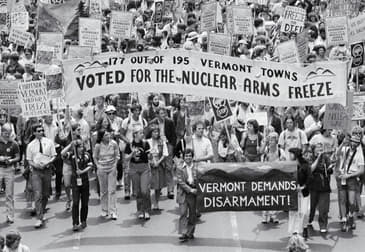
Physicist and activist, Frank von Hippel discusses his career in arms control and what the future may hold for the world. Two corrections – 1) The Nuclear Weapons Freeze march was from the UN to Central park and 2) The banner in the Freeze march said 177 out of 195 towns voted for the Freeze in Vermont, not 193 out of 197.

[00:00:03] There was a sort of grassroots uprising which then organized around a call by a young woman

[00:00:11] Randy Forsberg for a freeze on the nuclear arms race. It climaxed in June 1982

[00:00:19] in a meeting in Central Park and then a march to the UN of a million people

[00:00:26] and

[00:00:27] among those people

[00:00:29] was me and

[00:00:31] a million other people

[00:00:38] When recording the Black Sea experiment episode, I went to Princeton's program on science and global security to speak with Frank Von Hippel

[00:00:45] This was a real treat for me since I usually record podcasts online

[00:00:49] I had never been to Princeton and I had never actually met Frank

[00:00:54] Frank is a giant in the fields of arms control at least a physicist

[00:00:59] He is a prolific writer. In fact, I joke that every question

[00:01:02] I asked him an email or in person was answered but also included a paper he wrote

[00:01:09] Frank is also active in the Physicist Coalition for Nuclear Threat Reduction, which

[00:01:14] Already has a thousand physicists signed up. You might remember this group from episode 31

[00:01:20] Nuclear Threat Reduction and Current Events with Matthias Gross, Pertichem

[00:01:24] In this episode we're going to move away from

[00:01:28] The Black Sea experiment and on to some of the other work that Frank is passionate about

[00:01:35] I want to start actually a little further back than you probably think which is you're a physicist and

[00:01:47] How does a physicist get involved in

[00:01:51] Nuclear arms reduction. I actually have to even go back to my grandfather

[00:01:57] Wow, okay go as far back as you need to

[00:02:01] My grandfather was James Frank. I'm sorry your grandfather was James from yeah my mother's father

[00:02:07] You know and and he was involved in the Manhattan Project

[00:02:12] atomic physicist and at the University of Chicago and

[00:02:16] He had signed up only on the basis that if the time came to

[00:02:21] For decision to use a nuclear weapon he would be able to give his views on that to the highest

[00:02:28] Authorities so on that basis

[00:02:30] He was allowed to organize a group to write a report on what they thought about the the implications of the nuclear weapons

[00:02:38] Would be and and they focused especially on up the danger of a post-world war two nuclear arms race with the Soviet Union

[00:02:45] and they urged that the

[00:02:48] Bomb not be used on Japan except as a result of consultation

[00:02:54] With the United Nations, which had just been established and this is the famous Frank report. Yeah

[00:03:01] And of course their advice was not he did I

[00:03:06] Didn't know much of this story from my grandfather

[00:03:08] Niels Bohr was a family friend in friend of my grandfather's and would visit us where I grew up outside Boston

[00:03:15] I got the impression that they were

[00:03:19] That this was a pretty significant issue that first I had to become a famous physicist in order to to be listened to

[00:03:27] so I started work on that and then when I was an assistant professor at Stanford in the late 60s and

[00:03:36] Not contributing that much in my view not to the amount of work

[00:03:41] I was doing it was not resulting in that much advances to the field

[00:03:45] the Vietnam War

[00:03:47] Came the students rose up against the Vietnam wars

[00:03:52] Especially the draft and I was pulled in by some students who who organized

[00:03:58] Stanford workshops on social and political issues a group of student initiated workshops

[00:04:04] one of the students was Joel Premack a physicist and

[00:04:08] His his thesis advisor was Sid Drell Sid Drell

[00:04:12] Unbeknownst to me at the time

[00:04:14] Was the chairman of the strategic weapons panel of the president science advisory committee and Joel asked him

[00:04:22] well

[00:04:23] Sure, you guys are giving good advice

[00:04:26] Why is the policy so terrible and Sid said to him? Well, I'm sorry

[00:04:31] It's all classified and so Joel said okay. I'll find out so he set up a

[00:04:38] workshop on

[00:04:40] Science advising to understand what the impact of science advising was

[00:04:46] That workshop ended up going two semesters. He started with Marty Pearl who was a

[00:04:52] Experimental physicist at Stanford and then probably went on sabbatical and asked me to be the advisor for the second semester

[00:05:00] The workshop had a really major impact. It actually was the origin of the congressional science fellowships

[00:05:07] They proposed the congressional science fellowships, which

[00:05:11] Now more than 200 business a year go to work for Congress and for the executive branch as a result of those fellowships

[00:05:19] But they didn't answer the question that Joel was asking about science advising. What's the matter with science advising is and so

[00:05:27] He and I undertook to do some research on that. We spent the summer on that and

[00:05:34] wrote a report which was

[00:05:37] Printed up by Stanford and put in a closet

[00:05:39] but then somebody a reporter from I think the San Francisco examiner came down and

[00:05:45] wanted to do a story on the on these workshops and they gave him a copy of our

[00:05:50] Report and he thought it was sensational and he put it out on the

[00:05:56] Associated Press stories all over the world about the problems

[00:06:00] We had discovered about science advising being misused to legitimize

[00:06:05] policies that the scientists had advised against at that time the

[00:06:10] the science advising process was confidential and so

[00:06:16] Eventually, the reports would come out but long after

[00:06:18] The damage was done doesn't say what did you find was the problem with science advising that that it was confidential

[00:06:25] That it was being used to legitimize

[00:06:28] Policies which the scientists didn't actually not support basically the line was we consulted the greatest scientists and

[00:06:36] We've come to decided to do X and X was necessarily what the scientists had advised

[00:06:43] and and so I even have a copy of the front page of the National Enquirer

[00:06:49] Wait you were on the National Enquirer we were our report was on the front page over a picture of Jackie

[00:06:58] Onassis and Caroline so that should be on your CV, right?

[00:07:04] You were on the National Enquirer above

[00:07:07] Jackie now, but we were the headline

[00:07:09] National Enquirer now that is something else. I don't know any other academic that is on the front page

[00:07:17] Has made the National Enquirer

[00:07:19] I'll send you a PDF if you like that'd be fantastic. Yes. I think that'd be great

[00:07:24] We recommended that that science advisors not put up with this

[00:07:28] That if they're they find that their advice is being misused that they go public and we were told that this was

[00:07:36] During the president Nixon's time and we were told that

[00:07:39] That they were admonished the science advisors would admonish not to take our advice or you know to quit if they were

[00:07:46] Inclined to take our advice and in fact Nixon abolished the president's science advisory committee

[00:07:51] So then there were no scientists advising for a while. There were no scientists

[00:07:57] Advising the the president directly right when did that change then because I mean now we have

[00:08:02] Back in an attenuated form maybe even by President Ford. We have

[00:08:08] You know president science advisor. I spent a year and a half in working for the

[00:08:14] President science advisor under Bill Clinton and there is a committee but it's nowhere near what the president science advisory committee was

[00:08:22] You know the clout that they had before Nixon. Yeah

[00:08:27] So anyway, the this response to our report inspired us to write a book

[00:08:32] You are a prolific writer every time I ask you a question you send me three articles

[00:08:38] Right, okay, yeah, I mean which I like I'm just saying I've never met someone who's written so many different

[00:08:45] Articles about so many different things in so many different places. So what's this book that you wrote about?

[00:08:50] Well, it was called advice and dissent

[00:08:53] scientists and scientists in the political arena and it was first case studies of how science advising had been misused

[00:09:02] But then the the second half was that you don't have to be a famous scientist to be listened to we

[00:09:08] rediscovered non-governmental

[00:09:10] organizations which were just coming up in that period and

[00:09:14] Found that they were having a real impact and yet at young scientists straight out of their PhDs like Tom Cochran

[00:09:20] We're actually having an impact because they were going directly to the press

[00:09:23] And so this was different than what you had been brought up to believe that you had to first make your you know

[00:09:29] Name in physics and then you could go on to government

[00:09:33] right, and so this freed me from having to

[00:09:38] struggle to become a famous scientist and so had you always wanted to go into the governmental arena you just thought you had well

[00:09:44] Yeah, I was always interested in policy. It was not very clear exactly

[00:09:48] You know, I was not clear and how I thought I had to wait on to be invited

[00:09:52] But what happened in to complete my transition what what happened is so on the way to writing this book

[00:09:59] We wrote an article in Science

[00:10:01] Magazine called public interest science about the NGOs and at that time Ralph Nader was

[00:10:08] Promoting the idea of public interest law for young lawyers. So we you picked up that that moniker

[00:10:15] I received a call from the National Academy of Sciences

[00:10:19] And and they said we would like to straighten you out. Oh

[00:10:22] Why don't you come and on a fellowship to the National Research Council for a year and see how it really happens

[00:10:30] Oh

[00:10:31] So so come to our side. Yeah, so I went there but I didn't find it very interesting and

[00:10:37] It's all got me involved in something else. This is we're in an

[00:10:41] in activist state because of the Vietnam War as well

[00:10:45] The APS the American Physical Society was considering sponsoring so much thought

[00:10:51] sponsoring summer studies on policy issues

[00:10:54] Hmm, and so on Joel's suggestion I was invited to organize a summer study on summer studies

[00:11:02] Okay, and we looked at different options that summer and in the following summer

[00:11:07] I organized one of the options that we had looked at which is on reactor safety

[00:11:14] Which was a big issue at that time because that was the period when when all the nuclear power plants

[00:11:21] We have today we're being built and each nuclear power plant was inspiring and not in my backyard

[00:11:27] Yeah uprising so it turned out. I mean, this is a long story

[00:11:34] It turned out that the Atomic Energy Commission

[00:11:37] Which was just in in that period actually dismantled into the Department of Energy and the Nuclear Regulatory Commission

[00:11:43] But they had been struggling to try to explain to the public that not to worry about reactor safety issues

[00:11:51] And just then they put out a draft their latest attempt which is called the reactor safety study huge thing that

[00:11:59] big including appendices, so we reviewed the draft and

[00:12:05] that turned out to be the summer study and

[00:12:08] The argument that they made was that the probability is very low

[00:12:12] They had been in previous studies that they've been arguing making the argument that the consequences would be very low

[00:12:18] but that hadn't

[00:12:20] worked out right and so they were arguing the probability was very low and

[00:12:25] And then they focused on not cancers, but on

[00:12:30] high dose

[00:12:31] Consequences near the reactor and they compared those with plane crashes and things like that. Was that more successful?

[00:12:39] No, partly because of us

[00:12:42] My colleagues focused on the probabilities and they said, you know

[00:12:46] Much more uncertain than have been calculated here. I focused on the consequences and

[00:12:52] and I found and on the cancer consequences in particular and

[00:12:57] They had calculated those all

[00:13:00] In appendix and over what you were look look at and I've found much higher

[00:13:05] consequences than they cancer consequences and they calculated and

[00:13:09] I was trying I tried to figure out why and I realized that they had

[00:13:14] Assumed they had calculated that the radiation dose is only for one day

[00:13:18] They had assumed that people would be evacuated after one day. Mm-hmm, but most of the cancers would occur

[00:13:26] very low probabilities fired on wind

[00:13:30] accumulatively dominant and

[00:13:32] There was no way you could

[00:13:34] evacuate those people and so our

[00:13:37] Report made a splash actually at that time the Nuclear Regulatory Commission was just being

[00:13:45] started in fact, they were responsible for the

[00:13:48] final version of the report and there was no an act of oversight by Congress at that time Morris Udall was the chairman of

[00:13:57] the new Oversight Committee and

[00:13:59] he decided to have a hearing on this and

[00:14:02] As a result he asked the Nuclear Regulatory Commission to do a review in the light of the critiques and

[00:14:10] Then I was part of the review the NRC's review committee

[00:14:13] I was initially the minority member the critic but you know, finally one of the other members said

[00:14:20] Can anybody tell me anything that they did right?

[00:14:24] and

[00:14:25] and so the

[00:14:26] Nuclear Regulatory Commission actually issued a statement that certainly the summary was not a

[00:14:31] Did not adequately represent the situate effects

[00:14:34] So and anyway in the meantime a colleague of mine who is making a similar career transition was setting up a

[00:14:42] Center for Energy and Environmental Studies

[00:14:44] At Princeton, who was that Rob Sokolow who actually co-led one of the other studies?

[00:14:50] The energy efficiency study which was a very important study that the APS did that same summer

[00:14:57] Sponsored that same summer Rob invited me to come to Prince so that's

[00:15:02] and then I

[00:15:04] sort of made when impression I

[00:15:07] Was a colleague here who was working on nuclear weapons proliferation

[00:15:12] began working with him and then as a result of the fact that

[00:15:17] India had just exploded of its bomb that spring as a result of an Atomic Energy Commission

[00:15:22] Program to help them with their breeder reactor program and then later on really

[00:15:28] Especially due to the freeze nuclear weapons freeze movement. I

[00:15:32] Transitioned to working on nuclear arms control in the 80s. Yeah, so you did become a famous physicist

[00:15:40] Or infamous, you know

[00:15:43] One or the other yeah, but do you have a report named after you like your grandfather?

[00:15:48] No, no didn't not yet didn't make that not yet

[00:15:51] So how did you become the president of the Federation of American?

[00:15:58] Physicists that was the chairman not the chairman. So how did the elected chairman chairman? Well what happened to the Federation of American Scientists, which was

[00:16:08] established by the young physicists who came out of the Manhattan Project and

[00:16:13] which had a

[00:16:14] major impact early on in

[00:16:17] Defeating the proposal to keep all nuclear research under the military and and led to the establishment of

[00:16:24] Atomic Energy Commission which sort of lost its way later on they then

[00:16:30] You know went back to work the laboratories and the universities and and then later on

[00:16:35] Some of them the most outspoken of them were subject to the McCarthy

[00:16:40] investigations and so on in the

[00:16:43] 1970s they got a new full-time CEO president Jeremy Stone who revived

[00:16:51] revived the FAS and we got to know each other and he decided I should be the chairman of the FAS and

[00:16:59] put me out as I

[00:17:01] think there must have been a competitive election, but

[00:17:05] Sound like a competitive election, but somehow I was elected chairman

[00:17:09] You know at that time the FAS had about 5,000 members so

[00:17:14] So that's how I became the chairman. So I want to switch gears a little bit to something that was perhaps

[00:17:21] Not so successful and it seems like something you've spent a lot of your career on which is the fissile material

[00:17:29] Cutoff treaty. Why have you spent so much time on this? Well, it dates back to the

[00:17:34] freeze movement the nuclear weapons freeze movement of the early 1980s and

[00:17:39] That just to give you a little background. Yes, it is mostly forgotten. I think was an uprising during the

[00:17:48] early Reagan administration

[00:17:50] Against the nuclear arms race of grassroots uprising

[00:17:53] What happened is President Reagan was under the influence of a group called the Committee on the present

[00:18:00] danger

[00:18:01] Right committee of the present on the present danger which was organized

[00:18:06] To warn the country that the Soviet Union was ahead in nuclear arms race and

[00:18:12] That the Soviets thought that they could fight and win a nuclear war

[00:18:16] And and those folks came in with Reagan and he appointed them to high positions and he was on their board

[00:18:24] Reagan was on their board of directors

[00:18:27] especially in the Department of Defense and

[00:18:30] they

[00:18:31] proposed a huge US buildup

[00:18:34] 10,000 new warheads

[00:18:37] for an accurate missiles

[00:18:39] Accurate enough to take out this the Soviet all the Soviet military

[00:18:45] Nuclear targets in a first strike and they talked about fighting and winning a nuclear war

[00:18:50] Sorry, this look on my face is like oh my god. This sounds horrible

[00:18:55] It was horrible. Yeah, and it scared people it scared it scares me in retrospect

[00:19:01] And it wasn't sort of grassroots uprising which then organized around a call

[00:19:07] By a young woman Randy Forsberg who was an MIT

[00:19:12] graduate student for a freeze on the nuclear arms race it climaxed in 19 June 1982

[00:19:19] In a meeting in Central Park and then a march to the UN of a million people

[00:19:26] and

[00:19:27] among those people

[00:19:29] was me and

[00:19:31] million other people

[00:19:34] And I have a picture of that March in my memoir with a banner

[00:19:40] from the group from Vermont

[00:19:42] and the banner says

[00:19:45] 193 out of 197 towns in Vermont had voted

[00:19:51] For the nuclear weapons freeze that was a real grassroots movement

[00:19:55] And that I think actually is the backstory of the story

[00:19:59] I've told you so far because I think that the Soviets thought the US rut was run at least in this area by

[00:20:05] the military industrial complex and here they saw a

[00:20:11] opposition movement which was

[00:20:14] powerful enough so that Reagan

[00:20:16] Abandoned the buildup and first went to Star Wars and then ultimately to arms control

[00:20:22] Anyway, I got excited about and Jeremy Stone got excited about this movement and how can we help it and

[00:20:30] my personal thing well is

[00:20:33] What do I know about you know, I know about physical materials

[00:20:37] And so maybe we can include in the ending the arms race a ban on the production of physical materials and

[00:20:44] I

[00:20:45] worked on that and

[00:20:47] Published an article in Scientific American which was much more impactful. Well, maybe it'll be impactful again after today

[00:20:54] but in those days it was the ultimate forum for arms control proposals and

[00:20:59] Actually, you know one of the questions was how much physical material?

[00:21:03] Does the Soviet Union have how much does the US have well the it was secret in both countries, but it was but in fact

[00:21:11] It was other information that had been published that allowed me to figure out how much

[00:21:16] Material the US produced in the case of the highly enriched uranium is it's how much enrichment work

[00:21:24] Had been done. Yes paper is in Scientific American

[00:21:28] 1985 so the estimates that you have are from

[00:21:31] 1985 I think that's right and then the question was how much had the Soviet Union produced and

[00:21:38] I was not able to do anything on the highly enriched uranium

[00:21:41] But I was able to figure out how much plutonium they had produced from

[00:21:46] Looking at the amount of Krypton 85 in the atmosphere

[00:21:50] Krypton 85 is a I think 11 year half-life

[00:21:54] Isotope that is released when when you reprocess this noble gas for difficult to capture and this is they just released

[00:22:02] into the atmosphere and and then from my estimate of the US

[00:22:06] Reprocessing and the published data on the reprocessing in Europe was able to subtract that amount of Krypton 85 and see how much

[00:22:15] Krypton 85 the

[00:22:16] Soviet Union had

[00:22:19] produced so at that time the Scientific American had

[00:22:23] and still I think has

[00:22:25] editions in other languages including Russian and Capitza was the

[00:22:29] Publisher of the Russian edition, but they didn't publish my article. They didn't publish your article in Russian in Russian

[00:22:35] So I went and asked him what's going on here?

[00:22:38] She says well the sensors won't let us because there's the amount of plutonium that the Soviet Union has produced is secret

[00:22:48] And you want to publish their secret well, I said it's not the secret anymore

[00:22:53] And and so then Velikov went and went to them and said Kovachov says you can publish it

[00:22:59] And so they published they published it but two years later

[00:23:02] So it's a it's a nice graph in in here your calculation of the Krypton and

[00:23:08] How much plutonium then does each country? Well did each country have an 85?

[00:23:14] about a hundred tons each

[00:23:17] So to me that seems like a lot. Yeah, and the and the Soviet Union was still producing we had we had stopped

[00:23:24] So how many warheads is that?

[00:23:26] Well a hundred chances I've estimated that in the

[00:23:29] In a warhead there's there's about three kilograms and I did that by dividing the number of warheads by

[00:23:37] The amount of plutonium, but I was accused of revealing us secrets when I do

[00:23:43] And so that would be enough for about 30,000 which is about what we had at the peak

[00:23:49] One would argue that's enough

[00:23:51] Yeah, and the Soviet Union kept producing and they they have you know

[00:23:55] I forget maybe maybe 50 or 80 more times than we did produce and so they they went up to a higher level

[00:24:03] So the argument of the

[00:24:06] Cut-off treaty is that we just stopped producing

[00:24:10] Yeah, and we did stop producing because at the end of the war we started reducing the number of warheads

[00:24:17] And so there was excess but now we the problem was excess plutonium and

[00:24:22] Now we the problem was excess plutonium and highly enriched uranium

[00:24:27] Which is another story, but well, what do we do with the excess?

[00:24:31] Well in the case of highly enriched uranium tom neff proposed that we should buy

[00:24:37] The soviet excess so it wasn't lying around and have them blended down

[00:24:42] To low enriched uranium to fuel us

[00:24:45] Nuclear power plants and the result was for 20 years half of the us nuclear power was fueled

[00:24:52] by excess soviet

[00:24:55] weapons uranium

[00:24:57] That seems like a success an amazing story. Yeah, I think it's the biggest

[00:25:02] non-governmental initiated

[00:25:04] Saying that I'm aware of that's amazing. Yeah, so with any sort of treaty you need verification

[00:25:12] How would you verify that?

[00:25:15] Each country was not

[00:25:17] producing plutonium

[00:25:20] We finally do have a verification agreement bilateral verification agreement we haven't gotten an international

[00:25:27] agreement, but i'm not sure whether it's a treaty but it's an agreement between the us and

[00:25:33] And I think at that point

[00:25:36] It was probably russia rather than the soviet union to shut down the production reactors

[00:25:41] Okay, and it's actually easy. I mean

[00:25:45] I think it involves the possibility of visits, but it's easy to do this remotely

[00:25:49] by

[00:25:50] Looking at the infrared and seeing that there's no heat being generated

[00:25:54] But that's it you just simply look and make sure there's no heat being generated from a production reactor

[00:25:59] From in then, you know, it's off. That's easy. Yeah, there are three which are underground and there

[00:26:06] but there you could actually cooling water went into the

[00:26:10] River and you could actually see the thermal plume and and in the winter you could see that

[00:26:15] The ice was not there was no ice downstream from the exit

[00:26:20] So could you hide one?

[00:26:22] Well, that's what they had done to to hide them

[00:26:25] You know that I don't know that maybe they thought we

[00:26:29] They wanted to produce plutonium after the next world war or something like that

[00:26:33] And so that they protected these three from deep enough so that they might survive a nuclear

[00:26:39] bomb

[00:26:40] So are we still producing plutonium?

[00:26:43] For weapons, no and and we're actually not producing

[00:26:48] Plutonium for any purpose. That's another story which I what the other story the other story is the

[00:26:55] The first fight I was involved with after I came to Princeton was was ending

[00:27:01] the u.s

[00:27:02] plutonium breeder program

[00:27:04] breeder reactor program which which was a justification for

[00:27:08] For plutonium separation around the world including in india

[00:27:12] So do we have a cutoff?

[00:27:16] Treaty, uh missile cutoff treaty. We have a moratorium. So we have a moratorium. So your work is almost done

[00:27:21] Well moratorium except in a few countries

[00:27:25] Well, not more than well a few countries countries are still producing plutonium for weapons are

[00:27:31] india

[00:27:33] Pakistan well plutonium and highly enriched uranium india pakistan north korea

[00:27:39] israel maybe and

[00:27:41] now china

[00:27:43] and so the

[00:27:45] negotiating forum

[00:27:46] For multinational treaties has been the conference on disarmament in geneva

[00:27:51] Okay, the last treaty they negotiated was the comprehensive test ban treaty in 1996

[00:27:56] Oh, that was a long time ago. Yeah, the pistol material cutoff treaty was next was un general assembly voted that they should

[00:28:05] Negotiate a pistol material cutoff treaty

[00:28:08] But the conference on disarmament operates by on consensus not majority vote

[00:28:15] And russia and china initially

[00:28:18] Objected to that being the priority they wanted to because of star wars they wanted to negotiate

[00:28:25] A treaty on the prevention of an arms race in outer space

[00:28:28] They didn't and the u.s didn't want to want that even well after the reagan administration had abandoned that

[00:28:34] So that held up things for a while

[00:28:37] And then they agreed

[00:28:40] That you know the pistol material cutoff treaty could go forward

[00:28:44] But then pakistan objected

[00:28:46] Pakistan said we're behind india and unless

[00:28:50] part of the treaty is

[00:28:52] to make india's

[00:28:55] Stockpile

[00:28:57] At the same level as ours

[00:28:59] We're not going to do it and then and then I think later china backed up pakistan

[00:29:05] And because china decided as we've seen

[00:29:09] to build up

[00:29:10] beyond

[00:29:11] the level

[00:29:13] at which

[00:29:14] I mean chinese

[00:29:16] Whispered in my ear that they had stopped producing they did stop producing in 1987

[00:29:21] But then now I think they are they decided to restart production as part of to

[00:29:28] Part of the build-up that they're that they're

[00:29:31] It's been launched so this sounds extremely frustrating. Yeah

[00:29:35] No, I visited the ambassadors in geneva a couple times and had dinner with them

[00:29:41] And they were almost in tears of frustration

[00:29:44] basically not being able to do anything

[00:29:46] for

[00:29:48] Now it's it's almost 30 years

[00:29:52] Is that why you got out of government?

[00:29:54] No, no, I was in government for a year and a half

[00:29:57] Princeton gave me leave for two years, but even after a year and a half I figured

[00:30:02] That they had accepted all my ideas that they were going to accept and and rejected all my ideas

[00:30:08] That they weren't going to accept and there was no point in staying on

[00:30:14] Looking back at your career

[00:30:17] What is something that you want to still accomplish?

[00:30:20] What's your one thing that you wish you could you could get done i'm still for the the whole

[00:30:28] The whole thing and uh, what's the whole thing?

[00:30:31] And you've just met zia. Mia. There's this movement

[00:30:35] In the south mostly in the southern hemisphere for a treaty on the prohibition of nuclear weapons

[00:30:42] zia is the co-chair of their science advisory committee, you know of the about 70 countries that have ratified that treaty and

[00:30:50] And they're having a meeting at the end of no their second meeting at the since the treaty has come into force for those countries

[00:30:58] In at the un at the end of this month right now. That's that's the biggest hope

[00:31:04] That's the biggest source of pressure

[00:31:06] and we'd like to help them and so my my thought is

[00:31:11] You know so far it's only non-weapon states that have signed up, but my thought is that there are

[00:31:16] 32 countries

[00:31:18] Non-weapon states under the u.s nuclear umbrella and we've got to turn them around they're part of the

[00:31:25] support structure for the u.s nuclear

[00:31:28] deterrent and and and currently our the effort is to

[00:31:33] Get them to at least be observers

[00:31:36] At the meeting a few of them actually did were observers at the first meeting

[00:31:41] Germany, netherlands, norway australia

[00:31:44] You just got to get rid of these things. They're you know, I mean the fact that we have

[00:31:49] We're still here

[00:31:51] Having this conversation is a mirror is almost a miracle

[00:31:55] And and you know, we just can't continue to depend on luck this way. Do you think it's realistic?

[00:32:02] The u.s is very attached

[00:32:05] to its nuclear

[00:32:07] deterrence

[00:32:09] It's it's inexplicable, you know and and and because we right now the u.s is

[00:32:16] conventionally

[00:32:18] dominant

[00:32:19] During the cold war the soviet union had twice as many tanks on the other side of the

[00:32:25] inter-german border as we did and so we

[00:32:28] Had to we did depend on

[00:32:31] The fact that we turn into a nuclear war we have seven thousand

[00:32:35] warheads in germany

[00:32:37] west germany we're down to

[00:32:39] 20 now, so because those warheads

[00:32:43] Became obsolete because of precision guided munitions like the javelin and so on we can destroy a tank without destroying the town's

[00:32:50] kilometers or so away

[00:32:53] I've seen two administrations the obama administration and the biden administration

[00:32:57] Try for no first use

[00:32:59] And be opposed

[00:33:02] By the pentagon right and then the pentagon speaking through its counterparts

[00:33:07] In these allied countries, you know saying, you know that this is your security

[00:33:11] That's the state you got to put pressure on on the on the u.s

[00:33:15] So the idea is to put pressure on the allied countries to get them to revert to get them explain to them that this is

[00:33:23] You know even ukraine can hold off russia

[00:33:27] You know, there's no need for nuclear weapons. We should be de-emphasizing nuclear weapons

[00:33:32] We should have a no first starting with a no first use policy

[00:33:36] Which de facto I think the biden administration has

[00:33:39] In fact, they'd even try for no second use

[00:33:42] If so if russia what's the nuclear weapons? What's

[00:33:46] What's the idea behind no first use and I haven't heard of no second use so tell our listeners. No first use is saying

[00:33:55] We will not use nuclear weapons first and the u.s. Already has a policy. We will not use nuclear weapons first

[00:34:01] On a new non-nuclear weapon. Okay. Okay. So the exception is really

[00:34:08] Russia and china, okay

[00:34:10] and obama and then biden both wanted to

[00:34:15] accomplish that

[00:34:16] and no second use is

[00:34:19] If russia used a couple of tactical nuclear weapons in ukraine

[00:34:24] I think the the impulse of the biden administration would be to

[00:34:29] To a massive conventional response, you know, just wipe out the russian military in ukraine

[00:34:37] Instead of going to instead of going instead of responding with nuclear and then have the

[00:34:42] Russians respond to that with nuclear and just going up the world

[00:34:49] I mean this started out as a kind of happy, uh, you know conversation down memory lane and now it's getting very dark

[00:34:57] Well, it is a dark time right now

[00:34:59] It is in fact right now, you know, I retired from teaching but i've actually come back

[00:35:05] This semester i'm i'm co

[00:35:07] Advising junior task force policy task force on avoiding nuclear war with china and russia

[00:35:15] That seems very important

[00:35:19] So you

[00:35:21] You were around as a young researcher. I read in your memoirs that they were you were a young researcher during the cold war

[00:35:27] And now i'm an old researcher

[00:35:30] Now you're a seasoned researcher

[00:35:33] How do you compare?

[00:35:35] Kind of during the depths of the cold war and the feelings and the

[00:35:42] the rhetoric

[00:35:43] around nuclear

[00:35:45] issues between the depths of the cold war now

[00:35:49] Well, it's it's not as bad but it's getting worse. I mean and and I think the notion

[00:35:54] well, I mean of course putin has made it worse by threatening to use nuclear weapons if he doesn't get his way

[00:36:01] or if the nato get interferes with

[00:36:04] Beyond a certain unknown threshold with him getting his way in ukraine and

[00:36:10] Now we have a chinese build-up and a

[00:36:14] confrontation with china over taiwan which

[00:36:18] Maybe even more dangerous

[00:36:20] We don't have a two-body problem anymore, right?

[00:36:23] Right

[00:36:24] Sorry taking it back to physics

[00:36:27] so that surprises me because

[00:36:29] I mean your your response because I think it's very very bleak right now and you're saying that it's not as bleak as during the cold war

[00:36:38] Well, you know during the cold war we almost

[00:36:41] Went nuclear, you know, we really got closer to going nuclear than we are now

[00:36:47] You know there was you know, famously the korean missile crash

[00:36:51] But there was also actually a crash that that occurred

[00:36:55] The same month that I went to

[00:36:57] Moscow the first time this is the abel archer

[00:37:02] Story, I don't know whether you're familiar with that. I am

[00:37:05] surprisingly not

[00:37:08] This was in november early november annually nato as a as a nuclear exercise

[00:37:14] and this one

[00:37:16] Was in a time of this was in the early reagan administration andropoff

[00:37:20] Was the general secretary he'd been the head of the kgb

[00:37:25] In the soviet union, you know the early reagan administration really got them paranoid

[00:37:31] they were looking for

[00:37:33] signs

[00:37:34] You know of us preparations for a first strike including whether the blood banks were

[00:37:40] things built up

[00:37:43] Over here in preparation for a war so the kgb was looking to see if we were stocking up blood. Yeah

[00:37:51] That's and any other signs that you know all sorts of signs and so here was this nato exercise and it went beyond

[00:37:59] previous exercises including flying

[00:38:02] troops from the u.s

[00:38:04] To to europe and it ended all the way up to a command exercise on

[00:38:10] using nuclear weapons

[00:38:12] On eastern europe and the soviets thought this was for real

[00:38:18] And they began to load up nuclear warheads on their fighter bombers to preempt

[00:38:24] our

[00:38:26] Preempt our first strike

[00:38:30] And we detected this

[00:38:32] and our intelligence people detected this and and

[00:38:36] detected their thing and the question is how we would respond to you and and we had an intelligence

[00:38:43] Guy who said I would advise not responding

[00:38:47] And then the exercise ended

[00:38:50] and

[00:38:51] It was over the crisis was over

[00:38:55] But when I when I went to moscow there were there were headlines about u.s

[00:39:01] preparations for a nuclear attack in pravda and so on

[00:39:05] And you know when we went down to georgia you mentioned you went to georgia

[00:39:10] For in this first meeting

[00:39:12] john holdren and I who john was the

[00:39:15] vice chair

[00:39:16] Of the federation of american scientists and he later he became a science advisor and I we went on a hike up a local hill

[00:39:23] hill and and

[00:39:25] And somebody detected

[00:39:27] That we were speaking english and that we were americans and said why do you want to attack us?

[00:39:32] I mean it was really

[00:39:34] Dark up which seemed to be relatively unconcerned, but the the population it was real

[00:39:41] concern under in the in the population

[00:39:44] And actually on the eve

[00:39:47] While we were flying to moscow the day after movie was shown on

[00:39:55] And then they showed it on the russian tv

[00:39:58] and they asked me to to be on russian national tv what I thought of

[00:40:03] the messages

[00:40:05] was

[00:40:06] The messages don't start a nuclear war

[00:40:10] And this was

[00:40:12] Not long after the soviet shot down the korean airliner

[00:40:16] So it was it was really a peak

[00:40:19] So things can get worse

[00:40:21] Yeah

[00:40:22] What do you think the role of I guess scientist is?

[00:40:26] My answer to this is that often

[00:40:29] I mean that that in fact

[00:40:32] good

[00:40:33] Political ideas don't require the business, but then often

[00:40:38] People say ideally in an ideal world that would be a good idea, but there are technical problems

[00:40:44] And so one of our tasks is to you know like teller did with the test band, you know preventing a test band for

[00:40:53] 30 years

[00:40:54] With with his evasion scenarios. So those as those people physicists can think about those

[00:41:02] Objections and deal with them. The other thing is that sometimes

[00:41:06] Sometimes and i've seen more in other areas than an arms control is a third way

[00:41:12] to deal with the issue

[00:41:14] And I first first came on this in the nuclear reactor safety issue

[00:41:20] Where the anti-nuclear groups were saying

[00:41:24] Nuclear powers too dangerous

[00:41:26] The nuclear utilities were saying well it's that or freeze in the dark

[00:41:30] And

[00:41:32] Some colleagues including rob sacala who I mentioned and bob williams

[00:41:37] Said well, you know, there's a third way which is energy efficiency

[00:41:42] And so the predictions that were being made in those times

[00:41:46] For the amount of electricity consumption in these in this country are several fold over actually

[00:41:53] the level

[00:41:54] Of electricity consumption we have

[00:41:57] That has made the energy problem much

[00:42:00] Easier to to deal with as a result of energy efficiency things like leds before 1970

[00:42:06] Electricity consumption was growing

[00:42:10] Twice as fast as the as the economy and the utilities were projecting that that would continue

[00:42:16] Well, it didn't continue and and in fact this was a part of a involvement I had with the breeder program during the

[00:42:23] Carter administration

[00:42:24] I was part of a

[00:42:26] Then it's the second issue after the reactor safety that I got involved in we argued that the breeders reactors were

[00:42:34] Shouldn't be a plutonium basically glen seaborg who was the

[00:42:40] head of the atomic energy commission during for for a decade

[00:42:45] Was promoting what he called a plutonium economy. The world was going to run on

[00:42:50] Plutonium was going to be the fuel of the future

[00:42:53] You know we weren't going to need fossil fuels anymore that was that was his solution

[00:42:58] But the first product of that was the indian nuclear with the the nuclearization of the south asia india and then

[00:43:04] Pakistan responding with its own

[00:43:06] program

[00:43:07] and so we said

[00:43:10] you shouldn't do a plutonium program and you don't need to do it because

[00:43:15] These projections

[00:43:16] That are being made for nuclear power are just crazy. They'll never be realized

[00:43:21] You know they were projecting for for around now

[00:43:25] U.s. Would have about 2 000 nuclear power plants

[00:43:29] We plateaued at 100

[00:43:31] Yeah, and that's

[00:43:32] 20 percent

[00:43:34] Of u.s. Electricity if you multiply by 20 they were projecting from nuclear power alone

[00:43:41] Four times more electricity production in the u.s. Than we make from all sources

[00:43:46] So that was projection was made I was on this review panel that the carter administration set up

[00:43:52] that projection was made by the

[00:43:55] it was actually an intermediate between atomic energy commission and the

[00:43:59] Department of energy there was the energy research and development administration

[00:44:03] Okay briefly and and so carter had them do a panel

[00:44:07] to review the breeder program

[00:44:10] And bob williams an energy efficiency expert and I

[00:44:14] Were on that panel along with tom cochran tom actually brought us in tom comes up a lot because some

[00:44:21] With the nrdc the lawyer from the nrdc was on the

[00:44:25] Council for environmental quality. I think he may have

[00:44:28] Done that they came in and they with a projection like the one i've described

[00:44:34] And I said, where'd you get that?

[00:44:36] And I said would we'd rather not say

[00:44:40] Ha ha ha ha

[00:44:43] And

[00:44:44] So but then the utilities there were some nuclear utility presidents on the panel

[00:44:49] They said well, we have a similar projection. Well, yeah, they wanted to be high we can tell you how we got it

[00:44:56] and they sent me a book

[00:44:58] and the book had been done by a

[00:45:00] consulting firm with a proprietary

[00:45:04] econometric projection

[00:45:06] With a thousand parameters and and so I said well, you know, this must be based to history

[00:45:12] So what what did it what is in the history?

[00:45:15] then I realized that the history was

[00:45:19] That the price of electricity had been going down

[00:45:23] During this 50 years before 1970 and bob williams explained that it was economies of scale. It was scaling up the power plants

[00:45:32] And so I looked what are they projecting for the future price of electricity?

[00:45:36] And they were projecting it's continuing to go down. And so I went into the next meeting of this

[00:45:42] Panel and I asked the utility presidents

[00:45:46] Are you projecting the price of electricity to go down? He said oh no, he says nuclear power is expensive

[00:45:58] So guess what your model projects

[00:46:02] So so that's and and that's the way it worked out

[00:46:06] Yeah

[00:46:07] The price of electricity plateaued and and then in fact electricity consumption hasn't because of things like leds

[00:46:14] Hasn't even been growing as fast as the economy

[00:46:19] What you haven't mentioned in what I find fascinating someone who's coming at policy from

[00:46:24] You know the scientific side and kind of being out outside of it is

[00:46:27] Is as just a person observing I didn't realize how much

[00:46:33] the role of the scientist played

[00:46:36] in just

[00:46:37] our everyday science, so

[00:46:40] You made a difference in policy because you had a kind of scientific friendship

[00:46:46] with

[00:46:47] People yeah, yeah, that was right. That's exactly right

[00:46:50] It was it was the collaborators that i've had and it really made the difference and I didn't realize how much that

[00:46:57] mattered in

[00:46:59] In these policy issues and that that that internationalization of science is so important

[00:47:06] And in fact, that's why we set up the international panel on fissile materials

[00:47:11] Based on that that insight that you know, we

[00:47:15] This collaboration with the soviet scientists

[00:47:18] So is there something we haven't

[00:47:20] Discussed that you'd like to just mention the internet since I mentioned the internet

[00:47:24] Yeah, please that was sort of the follow-on to the

[00:47:28] To try to achieve a fissile material cutoff treaty to end production of

[00:47:33] plutonium and highly enriched uranium

[00:47:36] For any purpose not just for weapons

[00:47:38] And well, you know, we have these more moratoriums. We still have a japanese

[00:47:44] civilian plutonium program and a french civilian plutonium program

[00:47:48] But that's about it

[00:47:50] Is there a lesson to be learned from?

[00:47:53] The fissile cutoff treaty

[00:47:56] well

[00:47:57] I mean the the treaty

[00:47:59] Which doesn't exist which doesn't exist and so

[00:48:03] Most countries have stopped producing because they have more than enough. You know, what is the lesson?

[00:48:11] You know arms control my lesson actually is is that

[00:48:16] Things happen when the public is interested and i've sort of talked about in the arms control area three uprisings

[00:48:23] You know one was the uprising that led to the atmospheric test band treaty

[00:48:28] Uprising against radio to follow

[00:48:30] the second was

[00:48:32] the abm treaty

[00:48:34] happened not because of the physicists

[00:48:37] But because of a misstep by the army

[00:48:40] The first generation of anti-missile missiles

[00:48:44] Were nuclear armed had nuclear warheads because they didn't have this hit to kill

[00:48:49] Technology that we have today

[00:48:51] Still doesn't work but for other reasons for because of decoys and things like that

[00:48:57] including the biggest

[00:48:58] nuclear

[00:49:00] Weapon that it was ever tested underground was there was a five megaton warhead on the long-range

[00:49:07] Extra, which one was which test was that?

[00:49:09] That was the amchic could test they could they tested it under

[00:49:13] The illusion islands and then there was that was actually one of our studies in our book of advice and descent

[00:49:20] With the the scientists were warning that that might cause a tsunami

[00:49:24] Anyway, so the army

[00:49:26] Decided, you know, we want to defend the cities

[00:49:30] Let's put these missiles in the suburbs and that caused a nimby

[00:49:34] I think that's a reasonable nimby

[00:49:39] And that caused a nimby uprising

[00:49:42] and

[00:49:43] Congress noticed and they said well these scientists have been arguing against

[00:49:47] The submissive defense, maybe we should maybe we should learn more about what they're saying. Uh-huh and that led the congressional pressure

[00:49:56] especially in the senate

[00:49:58] And and especially from the senate final relations committee, which is sort of a been a nothing for many years

[00:50:04] But was powerful in those days under

[00:50:07] William fulbright

[00:50:09] They hit hearings on this and the senate

[00:50:13] actually

[00:50:14] Each year the margin

[00:50:17] Senate votes to pass the

[00:50:20] appropriations

[00:50:22] For the ballistic missile defense fell to and to in the nixon administration

[00:50:27] it was 50 50 with vice president agnew breaking the

[00:50:32] The tie and nixon knew that next year he would lose

[00:50:37] And that's why he decided to negotiate the abm treaty. So was it was the uprising?

[00:50:43] And then the third uprising with the nuclear weapons freeze movement

[00:50:47] So we need an uprising to get congressional attention

[00:50:54] Thank you for listening and a special thanks to frank for his hospitality at princeton and the stanley center for peace and security

[00:51:01] For partial sponsorship of this episode you can find more information on the podcast website my nuclear life.com

[00:51:08] Until next time i'm shelly lesher and this has been my nuclear life